

What Causes Grinding Noises in Your Dishwasher
A dishwasher that grinds instead of running quietly is usually flagging a mechanical problem rather than a minor glitch. The sound often gets worse the longer it goes unaddressed. Rancho Bernardo Appliance Repair fields calls about dishwasher grinding noises from homes across San Diego County on a regular basis. Most causes are straightforward once a technician opens the unit and looks closely at the moving parts.
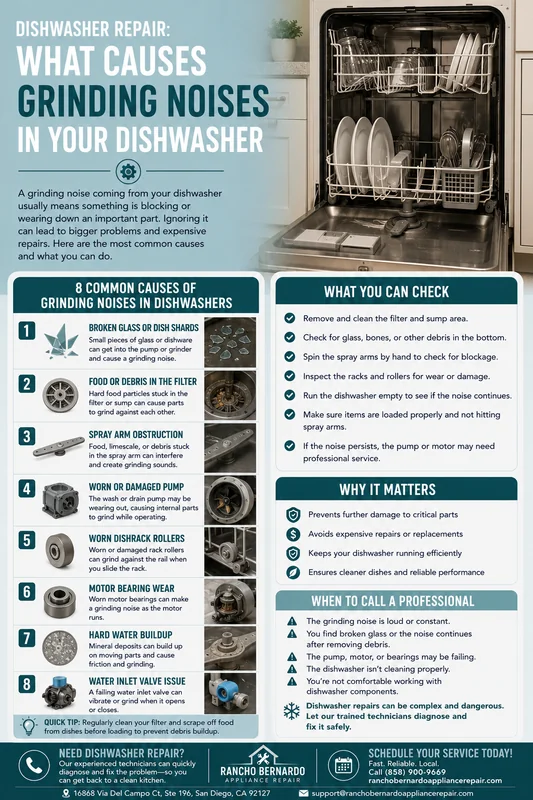
Something Stuck in the Chopper Blade
Many dishwashers use a small chopper blade near the drain to break down food scraps before draining. Bone fragments, fruit pits, or broken glass can jam this blade and create a harsh grinding sound. Scraping plates before loading reduces how often this happens.
A Worn or Damaged Drain Pump
The drain pump motor spins constantly during the drain portion of each cycle and wears down over years of use. Worn bearings inside the pump create a gritty, grinding hum that grows louder over time. Replacing the pump is a common and effective fix for this specific noise.
Debris Caught in the Spray Arm
Small bits of food or broken glass can lodge inside the spray arm as it spins during the wash. This creates a rattling or grinding sound as the arm rotates against the obstruction. Removing the spray arm for a quick rinse often resolves this issue without a service call.
A Failing Wash Motor
The wash motor circulates water throughout the cycle and can develop worn bearings after years of daily use. A failing motor often grinds loudest during the main wash portion of the cycle rather than the drain. This part typically needs professional replacement rather than a DIY fix.
Utensils or Small Items Fallen from the Rack
A dropped fork or small lid can fall through the rack and land near the spray arm or pump area. As the cycle runs, these items get caught and create a repeating grinding or clicking sound. Checking under the lower rack is always worth doing before assuming a part has failed.
Mineral Buildup on Moving Parts
Hard water common in parts of San Diego County leaves mineral deposits on the pump and spray arm bearings. This buildup increases friction and can produce a low grinding sound during operation. Regular cleaning cycles with a dishwasher cleaner help slow this kind of wear.
A Cracked or Warped Chopper Housing
Over many years, the plastic housing around the chopper blade can crack or warp from heat exposure. A damaged housing lets the blade wobble instead of spinning cleanly, creating a distinct grinding noise. This usually requires replacing the entire chopper assembly.
When to Stop Running the Dishwasher
If dishwasher grinding noises are loud, constant, or paired with a burning smell, stop using the machine right away. Continuing to run it risks damaging the motor or flooding the kitchen if a part fails completely. A technician visit at this point prevents a bigger repair down the road.
How a Technician Narrows Down the Cause
A technician usually starts by removing the lower rack and spray arm to check for trapped debris close up. From there, the drain pump and chopper assembly are inspected before testing the wash motor separately. This step by step process avoids replacing parts that turn out to be working fine.
Preventing Grinding Noises Through Regular Care
Scraping large food scraps off plates before loading protects the chopper blade from unnecessary strain. Running a cleaning cycle periodically also helps clear mineral buildup from pump and spray arm bearings. These habits are simple and cost nothing beyond a few extra seconds per load.
What Happens If You Ignore Ongoing Grinding
A dishwasher left to grind indefinitely often ends up with a fully seized pump or a cracked chopper housing. What starts as an affordable repair can turn into a full pump replacement over just a few months. Addressing the noise early almost always saves money in the long run.
Cost Expectations for Common Repairs
Clearing debris from a spray arm or chopper blade typically costs far less than replacing a drain pump. A full wash motor replacement tends to be the most expensive option among the common causes. An accurate diagnosis helps you understand which category your repair falls into.
Preventing Costly Chopper Blade Damage
Running the garbage disposal briefly before starting the dishwasher, if your kitchen has one, helps clear shared drain lines. Avoiding excessive pre rinsing also gives modern detergents the food particles they actually need to work properly. These small habits protect the chopper blade and pump from unnecessary wear over many years.
Dishwasher grinding noises almost always point to a specific worn or jammed part rather than a mystery problem. Rancho Bernardo Appliance Repair technicians have diagnosed these sounds across San Diego County kitchens since 2001. We identify the exact source before recommending any repair, saving you from replacing parts that were never the problem. Schedule a visit to quiet that grinding before it leads to a bigger breakdown.
FAQ: Dishwasher Grinding Noises
What usually causes a dishwasher to grind during draining?
Grinding during the drain portion of the cycle often points to a worn drain pump. Debris caught in the chopper blade is another common cause. Both create a gritty, mechanical sound that tends to get louder over several washes. A technician can identify which one is responsible during a short inspection.
Can food scraps really cause dishwasher grinding noises?
Yes, bone fragments, fruit pits, and even broken glass can jam the small chopper blade near the drain. This creates a harsh grinding sound as the blade struggles to break down the trapped debris. Scraping plates thoroughly before loading reduces how often this specific problem occurs.
Is mineral buildup a common cause of grinding sounds?
Hard water common in parts of San Diego County leaves mineral deposits on pump and spray arm bearings. This buildup increases friction and can produce a low, steady grinding sound during normal operation. Running a dishwasher cleaner cycle periodically helps slow this type of wear.
Should I stop using my dishwasher if it grinds loudly?
If the noise is loud, constant, or paired with a burning smell, stop running the machine right away. Continuing risks motor damage or a flood if a worn part fails completely mid cycle. A technician visit at this stage prevents a much larger repair later.
How do technicians diagnose dishwasher grinding noises?
Technicians typically remove the lower rack and spray arm first to check for trapped debris or damage. They then inspect the drain pump and chopper assembly for wear before testing the wash motor itself. This step by step approach identifies the true source of dishwasher grinding noises quickly.