

What Causes a Washer to Shake During the Spin Cycle
A washing machine that rocks and bangs during spin can sound alarming. It seems like it is about to walk across the laundry room. This shaking often starts small and grows more dramatic with each load. Rancho Bernardo Appliance Repair frequently diagnoses washer shaking during spin cycle for households across San Diego County. Most cases trace back to balance, leveling, or a specific worn suspension part.
An Unbalanced Load Inside the Drum
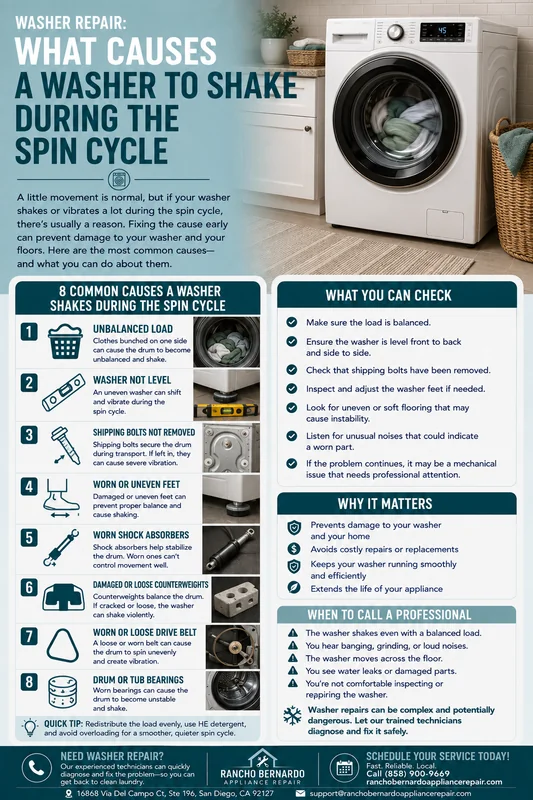
Heavy items like comforters or towels can bunch together on one side of the drum during the spin. This uneven weight distribution causes the entire machine to rock as it reaches full speed. Redistributing the load evenly before restarting the cycle is always worth trying first.
The Washer Is Not Level on the Floor
All four feet need to sit firmly and evenly on the floor for the machine to spin steadily. A washer that rocks even when empty usually needs its leveling feet adjusted. This is a common issue after moving the appliance or installing new flooring nearby.
Worn Suspension Springs or Rods
Top load washers use springs, while many front load models use shock absorbing rods, to stabilize the drum. These parts wear out gradually after years of daily spin cycles. Once worn, they no longer absorb vibration the way they did when new.
Shipping Bolts Left in a New Washer
New front load washers ship with bolts that lock the drum in place during transport and delivery. Forgetting to remove these bolts before first use causes intense shaking during every spin cycle. Checking the installation manual for bolt locations solves this immediately.
A Damaged or Worn Drive Bearing
The drive bearing supports the drum as it spins at high speed during the final part of the cycle. A worn bearing creates excess play, which shows up as strong vibration and often a loud grinding sound too. This repair typically requires professional tools and experience.
Loose Counterweights Inside the Cabinet
Washers use concrete or metal counterweights attached to the drum to balance its rotation. Over years of use, the bolts securing these weights can loosen or the weights themselves can crack. A technician can inspect and resecure these components during a service visit.
Overloading the Washer Beyond Capacity
Stuffing too many clothes into one load prevents the drum from balancing properly no matter how evenly items are placed. This strains the motor and suspension system with every single cycle. It ranks among the top causes of washer shaking during spin cycle complaints. Following the manufacturer’s recommended load size protects these parts long term.
When Shaking Signals a Bigger Repair
Occasional mild shaking is normal, especially with heavier loads like bedding or towels. Constant, violent shaking on every cycle, however, usually points to a specific mechanical failure inside the machine. Addressing it early prevents damage to the drum, motor, or surrounding cabinet.
How a Technician Diagnoses the Real Cause
A technician typically checks leveling and load balance first before inspecting springs, rods, and the drive bearing. Running a test cycle while observing the drum often reveals exactly where the excess movement originates. This ordered approach avoids replacing suspension parts that are still working properly.
Preventive Habits That Reduce Vibration Over Time
Distributing laundry evenly and avoiding overloaded cycles protects the suspension system from unnecessary strain. Periodically checking that the washer still sits level on the floor catches small shifts before they worsen. These habits are free and genuinely extend the life of suspension components.
Cost Considerations for Suspension Repairs
Spring or rod replacements are typically among the more affordable washer repairs a technician performs. A drive bearing replacement tends to cost more due to the additional disassembly involved. An accurate diagnosis helps set realistic expectations before committing to any repair.
Protecting Your Flooring While You Wait for Service
Avoid running full cycles on a washer that shakes violently, since this risks the machine shifting position entirely. Placing anti vibration pads underneath can reduce movement temporarily until a technician arrives. This precaution protects both your flooring and the machine itself.
How Long Suspension Repairs Typically Take
Most spring or rod replacements are completed within a single visit lasting about an hour or two. A drive bearing replacement takes longer since it requires more extensive disassembly of the cabinet. Scheduling ahead of a busy laundry week helps minimize disruption to your household routine.
Washer shaking during spin cycle is almost always traceable to one specific cause once a technician takes a look. Rancho Bernardo Appliance Repair has balanced, leveled, and repaired washers across San Diego County since 2001. Our technicians check load balance, leveling, and suspension parts in a single organized visit. Call before the shaking causes damage to your flooring or the machine itself.
FAQ: Washer Shaking During Spin Cycle
Is it normal for a washer to shake a little during spin?
Mild shaking is normal, especially with bulky loads like comforters or bath towels that shift during spin. Strong, violent shaking on every single cycle, however, usually points to a mechanical issue. That distinction is worth noting before deciding whether a repair is needed.
How can I tell if my washer just needs to be leveled?
If the machine rocks even when completely empty, uneven feet on the floor are the most likely cause. Adjusting the leveling feet so all four sit firmly on the ground often resolves the shaking entirely. This is one of the simplest checks to try before calling for service.
What are shipping bolts and why do they matter?
New front load washers ship with bolts that lock the drum in place during transport and delivery. Leaving them installed after setup causes intense washer shaking during spin cycle every single time. Checking the installation manual for bolt locations solves this immediately at no cost.
Can an unbalanced load damage my washing machine over time?
Yes, repeated unbalanced loads put ongoing strain on the suspension springs, rods, and drive bearing inside the machine. This strain accelerates wear and can shorten the overall lifespan of these parts considerably. Distributing laundry evenly before starting each cycle helps protect the machine long term.
When does washer shaking mean a bearing has failed?
A failing drive bearing usually causes strong vibration paired with a loud grinding sound during the spin cycle. This combination is different from the milder rocking caused by an unbalanced load or leveling issue. A technician can confirm bearing wear with a hands on inspection.