

Common Reasons Your Dryer Takes Too Long to Dry Clothes
Laundry that comes out damp after a full cycle is one of the most common dryer complaints. This issue usually points to restricted airflow rather than a broken heating element. Rancho Bernardo Appliance Repair hears about a dryer takes too long to dry clothes across San Diego County every week. Most causes are simple once you know where to look.
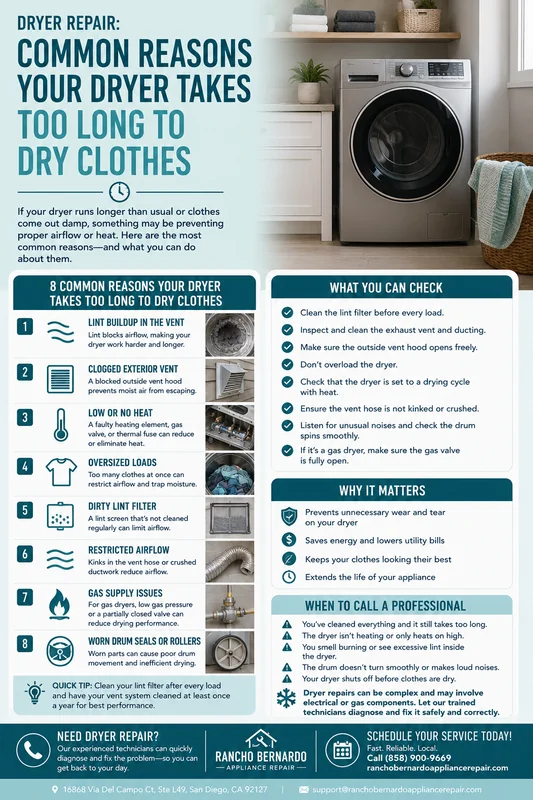
A Clogged Lint Trap or Vent
A full lint trap restricts airflow before it ever reaches the vent system. A blocked exhaust vent compounds this problem even further down the line. Cleaning both regularly is the single most effective fix available.
A Vent Run That Is Too Long
Excessively long or winding vent runs reduce how efficiently moist air escapes outside. Every extra bend adds resistance that slows down the drying process. Shortening or simplifying the vent path improves performance noticeably.
Overloading the Dryer With Too Many Clothes
Stuffing too many items into one load blocks proper air circulation around each piece. Smaller, more frequent loads actually dry faster than one oversized load. This simple habit change costs nothing and helps immediately.
A Failing Heating Element
The heating element warms the air that tumbles through the drum during each cycle. A partially failed element still produces some heat but not enough for efficient drying. Testing this part confirms whether replacement is needed.
A Malfunctioning Moisture Sensor
Many dryers use a sensor to detect when clothes are actually dry and end the cycle. A dirty or failing sensor can end cycles too early repeatedly. Cleaning the sensor strips inside the drum sometimes resolves this.
Mixing Heavy and Light Fabrics Together
Heavy items like towels take longer to dry than lightweight clothing in the same load. Mixing these fabric types means lighter items finish while heavier ones stay damp. Separating loads by fabric weight improves overall drying time.
A Weak or Failing Blower Wheel
The blower wheel pushes air through the drum and out through the vent system. A cracked or loose blower wheel moves less air than the dryer needs. This part failure is less common but does happen over time.
Incorrect Cycle Selection
Selecting a low heat or delicate cycle for heavier fabrics naturally extends drying time. Double checking the cycle setting matches your load type is worth doing first. This simple check costs nothing before assuming a mechanical failure.
How Humidity Affects Drying Performance
Higher indoor humidity, common on foggy coastal days near San Diego, can slightly slow drying times. This effect is usually minor compared to a genuine mechanical or vent issue. It is worth ruling out other causes first regardless.
When to Call a Professional
If cleaning the trap and vent does not improve drying time, a technician visit is warranted. Persistent long drying times often point to a part that needs testing. Catching this early prevents a full heating element failure later.
How Technicians Diagnose Slow Drying
A technician checks airflow, the heating element, and the moisture sensor in a logical order. This process identifies the true bottleneck rather than guessing at parts. Most diagnostic visits are completed within about an hour.
How Vent Length Guidelines Are Determined
Manufacturers publish maximum vent length recommendations based on airflow testing. Exceeding these guidelines is a common cause behind a dryer takes too long to dry clothes complaint in larger homes. A technician can measure your actual vent run during a visit.
Comparing Gas and Electric Dryer Drying Times
Gas dryers typically heat faster than electric models of similar size and age. This difference is normal and not a sign of malfunction on its own. Knowing your dryer type helps set realistic drying time expectations.
What a Slower Drying Trend Over Months Means
A gradual increase in drying time over several months points to slow lint buildup somewhere. This pattern is different from a sudden change, which suggests a specific part failure. Either way, the trend is worth addressing before it worsens further.
Simple Tests You Can Run at Home
Running an empty cycle and checking the vent’s exterior airflow reveals a lot. Weak airflow at the outside cap points toward a blockage somewhere in the duct. This simple test helps a technician focus the visit efficiently.
Why Load Size Habits Matter More Than Expected
Many households gradually increase load sizes over the years without noticing the change. This slow shift is a surprisingly common hidden cause of longer drying times. Returning to smaller, properly sized loads often restores normal performance quickly.
A dryer takes too long to dry clothes almost always has an identifiable, fixable cause. Rancho Bernardo Appliance Repair has resolved slow drying complaints across San Diego County since 2001. Our technicians check airflow and components methodically to find the real issue. Schedule a visit to get your laundry routine back on track.
FAQ: Dryer Takes Too Long to Dry Clothes
What is the very first thing I should check myself?
Start with the lint trap and the exterior vent cap, since both are easy to reach. A clogged trap or blocked vent is the most common cause by far. Clearing both takes just a few minutes and often solves the problem.
Can overloading really slow down drying that much?
Yes, an overstuffed drum blocks proper air circulation around every single item. This is one of the simplest reasons behind a dryer takes too long to dry clothes complaint. Splitting into smaller loads usually fixes it right away.
How do I know if the heating element has failed?
Clothes that come out cold instead of just damp suggest a fully failed element. A partially working element still produces some heat but not enough. A technician can test the element’s resistance to confirm either way.
Does the length of my vent run really matter that much?
Yes, longer or more winding vent runs create more resistance against airflow. This resistance directly slows how quickly moisture escapes the dryer. Shortening or straightening the path can noticeably improve performance.
Is a moisture sensor issue expensive to fix?
Cleaning the sensor strips is often free and simply requires a soft cloth. If the sensor itself has failed electronically, replacement is a modest repair cost. A technician can determine which situation applies to your dryer.