15 Warning Signs You Should Not Ignore
Most major appliance breakdowns do not happen without warning. Small clues often appear weeks before a full failure occurs. Rancho Bernardo Appliance Repair has compiled the most common appliance warning signs homeowners across San Diego County should never ignore. Catching these early usually means a smaller repair bill down the road.
Unusual Noises During Normal Operation
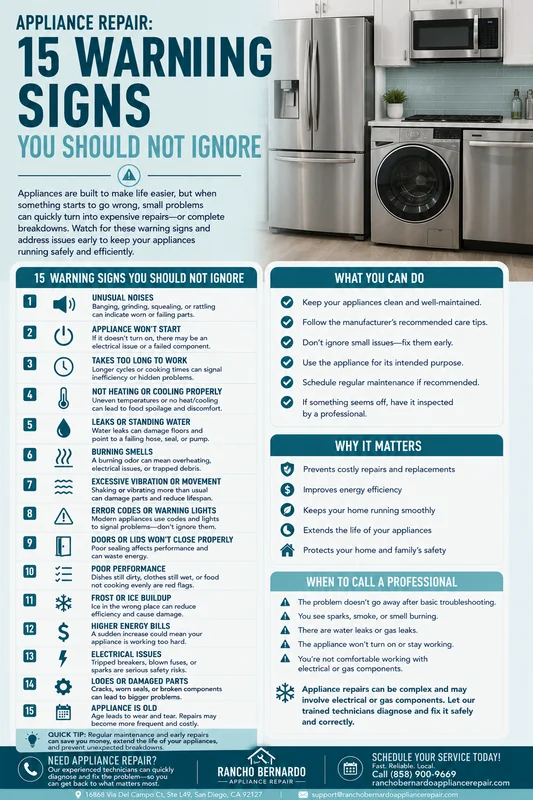
Grinding, squealing, or banging sounds rarely appear without a real mechanical cause. These noises often mean a part is wearing out faster than expected. Addressing noise early prevents more expensive damage later.
Rising Utility Bills Without Explanation
An appliance working harder than it should almost always uses more electricity or gas. Comparing bills month to month can reveal this pattern before other symptoms appear. This is one of the sneakier appliance warning signs to catch.
Visible Leaks Around Any Appliance
Water pooling near a dishwasher, washer, or refrigerator always deserves quick attention. Even a small leak can lead to flooring and cabinet damage over time. Identifying the source early limits the extent of repairs needed.
Inconsistent Temperatures in the Fridge or Oven
Food spoiling faster than usual or baked goods cooking unevenly both point to real issues. These inconsistencies tend to worsen gradually rather than appear suddenly. A thermometer check confirms whether the problem is real.
Burning or Unusual Smells
A persistent burning smell during operation should never be dismissed as normal. This often points to an electrical or motor issue needing prompt attention. Turning off the appliance and calling a technician is always the safer choice.
Appliance Runs Constantly Without Cycling Off
Refrigerators, air conditioners, and heating systems are designed to cycle on and off. Constant running usually means the unit is struggling to reach its target temperature. This strains components and increases energy use significantly.
Visible Rust or Corrosion
Rust around seals, hoses, or the appliance body can lead to leaks over time. This is especially common in coastal areas near San Diego with salt air exposure. Catching corrosion early prevents more serious structural damage.
Doors or Lids That No Longer Seal Properly
A door that does not close tightly lets air, water, or heat escape where it should not. This affects efficiency and performance across refrigerators, ovens, and dishwashers alike. Testing the seal with a simple paper test is worth doing.
Vibration or Shaking During Use
Washers and dryers that shake excessively often point to leveling or suspension issues. Left unaddressed, this vibration can damage internal components over time. Checking that the appliance sits level is a free first step.
Slower Performance Than Usual
Dishes coming out less clean or laundry taking longer to dry both signal declining performance. These changes often happen gradually enough to go unnoticed at first. Paying attention to subtle shifts catches problems early.
Frequent Circuit Breaker Trips
An appliance that repeatedly trips the breaker is drawing more power than it should. This can point to an electrical fault within the unit itself. This warning sign deserves prompt professional attention for safety.
Error Codes or Warning Lights
Modern appliances often display a code before a full failure happens. Ignoring these alerts means missing an early opportunity to address the issue. Looking up or calling about a code takes just a few minutes.
Age Approaching the Expected Lifespan
Most major appliances have a typical lifespan between ten and fifteen years. Units nearing this age are statistically more likely to show warning signs. Age is worth factoring into any repair decision.
Reduced Water Pressure or Flow
Dishwashers and washers relying on water flow can show reduced pressure as parts wear. This often points to a clogged valve or failing pump component. A technician can test water pressure during a diagnostic visit.
A General Sense That Something Feels Off
Homeowners often notice subtle changes before they can quite explain what is different. Trusting this instinct and scheduling an inspection rarely turns out to be a waste of time. Early inspections consistently save money compared to emergency repairs.
Why a Written Log of Symptoms Helps Technicians
Jotting down when a noise happens or how often a code appears creates a useful pattern. This record helps a technician diagnose faster instead of relying on memory alone. Even a few notes on a phone make a real difference during a visit.
Recognizing these appliance warning signs early puts you in control of repair timing and cost. Rancho Bernardo Appliance Repair has helped San Diego County households catch problems early since 2001. Our technicians inspect thoroughly rather than just addressing the obvious symptom. Schedule a checkup if any of these signs sound familiar.
FAQ: Appliance Warning Signs
Which warning sign should I take most seriously?
Burning smells and visible leaks both deserve the most immediate attention. These two signs carry real safety and property damage risk if ignored. Everything else on this list is worth addressing, but these two should never wait.
Can I really save money by acting on early warning signs?
Yes, addressing a small worn part is almost always cheaper than replacing a fully failed component. Waiting until an appliance breaks down completely often means a larger, more urgent bill. Early appliance warning signs exist specifically to help you avoid that outcome.
How often should I inspect my appliances myself?
A quick visual and listening check every few months catches most obvious issues. Annual professional inspections cover the parts a homeowner might easily miss. Together, these habits keep small problems from becoming large ones.
Is it normal for older appliances to show more warning signs?
Yes, wear naturally increases as appliances approach the end of their expected lifespan. This does not mean every warning sign requires replacement, though. A technician can help determine whether repair still makes sense.
What should I do if I notice several signs at once?
Multiple warning signs together usually point to a more significant underlying issue. Scheduling a full diagnostic visit is the safest next step in this situation. A technician can prioritize which parts need attention first.