

Reasons Your Dishwasher Is Leaving Dishes Dirty
Pulling out dishes that still look dirty after a full cycle defeats the entire purpose of the appliance. This frustrating problem usually traces back to one of several specific causes. Rancho Bernardo Appliance Repair helps San Diego County homeowners solve a dishwasher leaving dishes dirty on a regular basis. Most causes are simple to identify and fix.
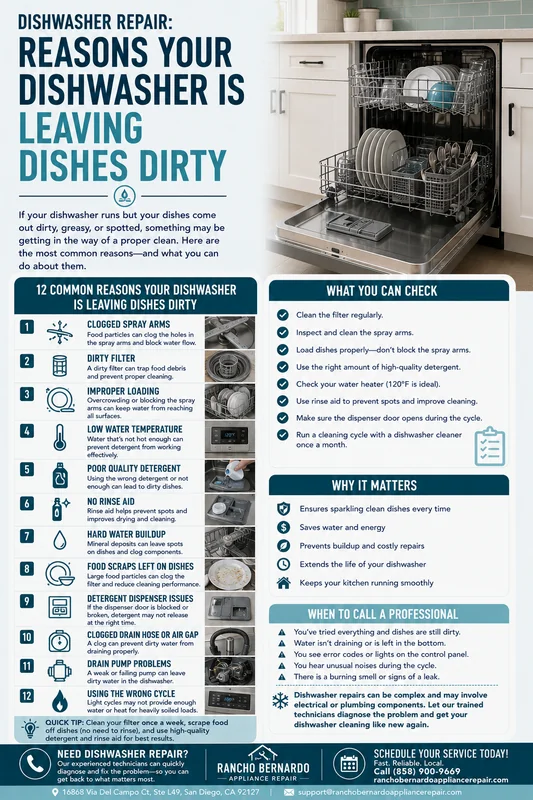
A Clogged or Damaged Spray Arm
The spray arm distributes water and detergent throughout the tub during each cycle. Clogged nozzles or a cracked arm prevent water from reaching every dish evenly. Removing and rinsing the spray arm is a quick first step.
Using the Wrong Amount or Type of Detergent
Old or clumped detergent loses its cleaning effectiveness over time. Using too little detergent for heavily soiled loads also leaves residue behind. Switching to fresh detergent stored properly often improves results immediately.
Overloading or Improperly Loading the Racks
Dishes stacked too closely block water and detergent from reaching every surface. Items nested inside each other also trap food particles from being rinsed away. Proper spacing between dishes makes a noticeable difference.
Water Temperature That Is Too Low
Dishwashers rely on hot water to dissolve detergent and break down food residue effectively. Water below the recommended temperature leaves grease and grime behind. Running the kitchen faucet hot before starting the cycle helps.
A Clogged Filter at the Bottom of the Tub
Most modern dishwashers use a removable filter to catch food particles during washing. A clogged filter recirculates dirty water instead of draining it away properly. Cleaning this filter monthly is one of the most effective habits available.
A Failing Wash Pump
The wash pump circulates water with enough pressure to clean dishes thoroughly. A weakening pump motor reduces water pressure throughout the entire cycle. This part typically requires professional testing and replacement.
Hard Water Mineral Buildup
Hard water common in parts of San Diego County leaves mineral film on dishes and components. This buildup reduces cleaning effectiveness over time if left unaddressed. Using a rinse aid and occasional descaling cycle helps significantly.
Pre Rinsing Dishes Too Thoroughly
Modern dishwasher detergents are formulated to work with some food residue present. Over rinsing dishes before loading can actually reduce cleaning performance slightly. Scraping large scraps off is enough without a full pre wash.
A Malfunctioning Water Inlet Valve
The inlet valve controls how much water enters the tub for each cycle. A partially failing valve may not deliver enough water for a thorough wash. This part failure often shows up gradually rather than suddenly.
Selecting the Wrong Wash Cycle
A quick or eco cycle uses less water and time than heavily soiled dishes actually need. Matching the cycle to the load’s soil level improves cleaning results. This simple adjustment costs nothing and helps immediately.
How a Technician Diagnoses Cleaning Problems
A technician checks the spray arm, filter, and pump pressure during a focused inspection. This process identifies whether the cause is maintenance related or a failing part. Most diagnostic visits are completed within a single appointment.
Comparing This to a Dishwasher That Will Not Start
A unit that never starts at all points to a power or control board issue instead. A dishwasher leaving dishes dirty is different, since the cycle clearly runs to completion. This distinction helps narrow down the cause quickly.
How Rinse Aid Improves Cleaning Results
Rinse aid helps water sheet off dishes instead of leaving spots and residue behind. It also supports the detergent’s cleaning action during the main wash portion. Keeping the rinse aid dispenser filled is a simple, often overlooked step.
What Different Soil Levels Require
Lightly soiled dishes need less water and time than pots with baked on food. Selecting the correct cycle for the actual soil level improves results significantly. Running everything on the quickest setting often leads to disappointing outcomes.
Simple Habits That Improve Results Immediately
Loading dishes so nothing blocks the spray arm’s rotation makes an immediate difference. Using fresh detergent and keeping the filter clean rounds out the basics. These habits solve a surprising share of cleaning complaints without any repair.
When It Is Time to Call a Technician
If cleaning the filter and adjusting loading habits does not help, a part may be failing. Continuing to run cycles without improvement wastes water and energy needlessly. A diagnostic visit at this point identifies the real cause quickly.
A dishwasher leaving dishes dirty almost always has a fixable, identifiable cause behind it. Rancho Bernardo Appliance Repair has resolved cleaning complaints across San Diego County since 2001. Our technicians check every component methodically instead of guessing at the problem. Schedule a visit to get spotless dishes again after every cycle.
FAQ: Dishwasher Leaving Dishes Dirty
What is the most common reason dishes come out dirty?
A clogged filter at the bottom of the tub is the most frequent cause by far. It recirculates dirty water instead of draining it away between cycles. Cleaning this filter monthly resolves a large share of these complaints.
Could my detergent be the actual problem?
Yes, old or clumped detergent loses much of its cleaning power over time. Storing detergent in a dry place and using it before it expires helps. A dishwasher leaving dishes dirty is sometimes solved with nothing more than fresh detergent.
Does water temperature really affect cleaning results that much?
Yes, hot water is essential for dissolving detergent and breaking down grease effectively. Water that is too cool leaves residue on dishes even with a full cycle. Running the sink hot first ensures the dishwasher starts with warm water.
How do I know if the spray arm is clogged?
Remove the spray arm and hold it up to check for blocked nozzle holes. Mineral deposits or food debris often block these small openings over time. Soaking and rinsing the arm usually clears the blockage completely.
When does this problem mean the pump needs replacing?
If cleaning the filter and spray arm does not improve results, the pump may be weak. Reduced water pressure throughout the entire cycle points toward this specific part. A technician can test pump pressure to confirm the diagnosis.