

Common Reasons Water Leaks Inside Your Refrigerator
Finding a puddle inside the crisper drawer is a strange but common refrigerator complaint. Unlike an exterior leak, this water forms somewhere within the unit itself. Rancho Bernardo Appliance Repair diagnoses water leaking inside refrigerator compartments across San Diego County regularly. Most causes trace back to a blocked drain or a failing seal.
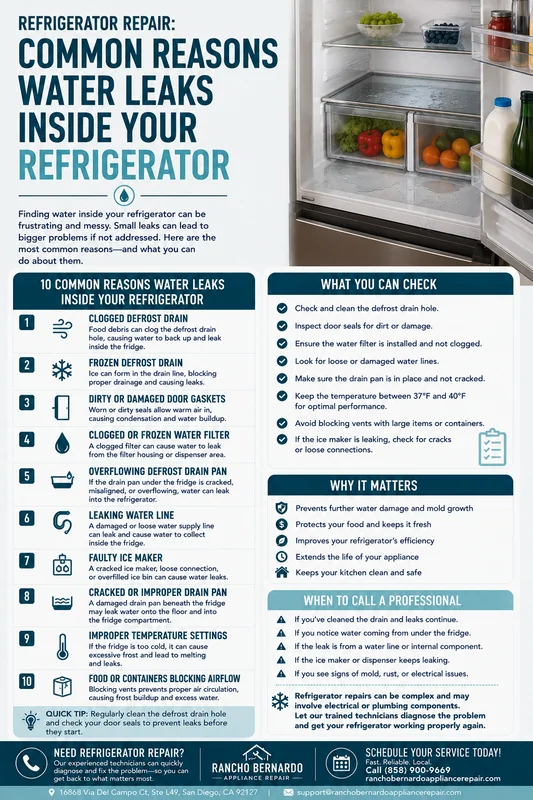
A Clogged Defrost Drain
The defrost drain carries melted frost away from the evaporator coil during each cycle. Food debris or mineral buildup can block this small drain over time. Once blocked, water backs up and pools inside the fridge compartment.
A Cracked or Damaged Drain Pan
The drain pan sits beneath the unit and collects water from the defrost cycle. A cracked pan lets water escape before it can evaporate properly. This often shows up as moisture inside the lower compartments.
Condensation From a Poor Door Seal
A worn door gasket lets humid kitchen air enter the fridge continuously. This extra moisture condenses on cold surfaces and can pool near the bottom. Replacing the seal often stops this type of leak completely.
A Blocked Water Filter Housing
Units with a built in water dispenser use a filter housing that can develop small leaks. A cracked housing or loose filter allows water to drip into the fridge interior. Checking the filter seal is a quick diagnostic step.
Ice Maker Line Connections
The water line feeding the ice maker runs through the interior of many refrigerators. A loose or cracked fitting along this line can leak directly inside the unit. This cause is common on models with built in ice makers
Overfilled or Blocked Crisper Drawers
Produce packed too tightly can block small drainage channels built into some crisper drawers. This traps condensation that would normally drain away properly. Rearranging stored produce sometimes resolves the issue immediately.
A Failing Defrost Heater
The defrost heater melts frost off the coil on a regular schedule. A malfunctioning heater can create excess melted frost faster than the drain can handle. This mismatch often leads to interior pooling.
How to Check the Defrost Drain Yourself
Locate the small drain hole at the back of the freezer compartment. Flushing it gently with warm water can clear minor clogs. This simple step resolves a large share of interior leak complaints.
When Interior Leaks Signal a Bigger Issue
Water that returns consistently despite clearing the drain suggests a failing heater or control board. Continuing to ignore this can lead to mold growth inside the unit. A technician visit at this point is worth scheduling.
How a Technician Diagnoses This Complaint
A technician checks the drain, pan, and door seal in a logical sequence during inspection. This process identifies the true source rather than guessing at a fix. Most diagnostic visits are completed within a single appointment.
Preventing Future Interior Leaks
Flushing the defrost drain every few months keeps it clear of debris buildup. Wiping down the door seal regularly also helps it stay flexible and effective. These small habits meaningfully reduce interior leak complaints.
Protecting Food From Moisture Damage
Moving food away from standing water limits spoilage while you address the cause. Drying the affected area helps prevent mold from developing in the meantime. This simple step protects your groceries during the repair process.
Cost Expectations for Common Repairs
Clearing a clogged drain typically costs far less than replacing a cracked drain pan. A door seal replacement falls in a similar affordable range. An accurate diagnosis helps you understand which repair category applies.
How Often This Issue Appears Across San Diego County
Rancho Bernardo Appliance Repair fields calls about interior refrigerator leaks throughout the year. Warmer months tend to bring slightly more calls due to increased condensation. This seasonal pattern is worth knowing if you notice occasional moisture.
Comparing an Interior Leak to an Exterior Puddle
An exterior puddle beneath the unit usually points to a different set of causes entirely. Water leaking inside refrigerator compartments specifically involves the defrost or seal system. This distinction helps a technician focus the diagnosis correctly.
What to Do if You Notice Mold Developing
Standing moisture left unaddressed for weeks can lead to mold growth inside the unit. Cleaning affected surfaces with a mild solution helps in the short term. Resolving the underlying leak is still necessary to prevent recurrence.
Why Prompt Repair Protects Nearby Cabinetry
Water escaping the unit can eventually damage surrounding wood cabinetry over time. Addressing an interior leak quickly limits this risk. This is one more reason to schedule service at the first sign of moisture.
Water leaking inside refrigerator compartments almost always has a specific, fixable cause. Rancho Bernardo Appliance Repair has resolved these calls across San Diego County since 2001. Our technicians trace the source methodically instead of guessing. Schedule a visit to keep your refrigerator interior dry and food safe.
FAQ: Water Leaking Inside the Refrigerator
What is the most common cause of interior leaks?
A clogged defrost drain is the single most common cause by far. Food debris blocks the small drain hole at the back of the freezer. Flushing it with warm water resolves a large share of these complaints.
Can I clear a clogged defrost drain myself?
Yes, gently flushing the drain hole with warm water often clears minor clogs. This simple step causing water leaking inside refrigerator compartments takes only a few minutes. If water keeps returning, a technician visit is the next step.
Is a leaking ice maker line dangerous to ignore?
It is not dangerous, but it can lead to mold growth if left unaddressed. A loose fitting is usually an easy and affordable repair for a technician. Addressing it promptly protects both the unit and your food.
How do I know if my door seal is causing the leak?
Check for visible cracks or stiffness along the rubber gasket around the door. A weak seal often lets in enough humidity to create visible condensation. Replacing the seal usually resolves condensation related leaks quickly.
Should I keep using the fridge while water is pooling inside?
You can continue using it, but move food away from the standing water. Dry the area regularly to prevent mold while waiting for repair. Scheduling a visit sooner rather than later prevents the issue from worsening.