

Why Ice Keeps Building Up on the Back Wall
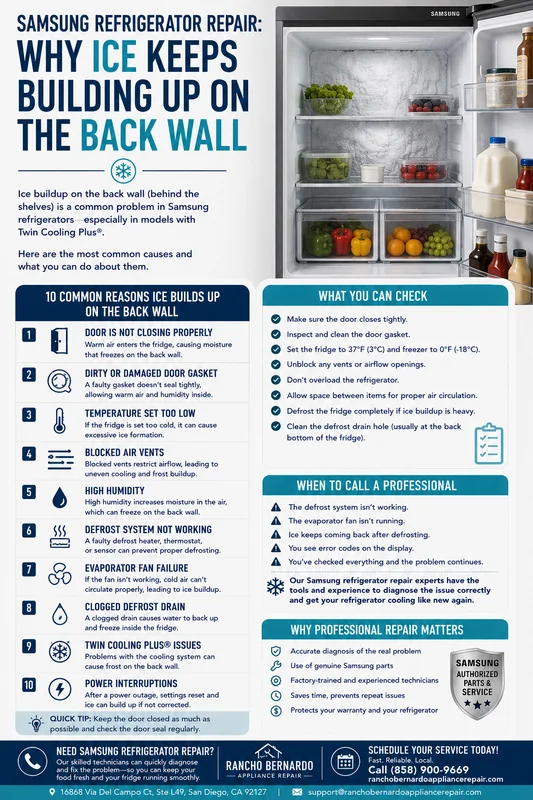
Samsung refrigerator owners frequently report a specific issue: ice accumulating on the back wall of the fresh food compartment. This distinctive problem has a well known set of causes. Rancho Bernardo Appliance Repair diagnoses ice buildup on the refrigerator back wall for San Diego County homeowners regularly. Understanding the cause helps determine the right fix quickly.
A Clogged Defrost Drain
The defrost drain removes melted frost from the evaporator coil during automatic defrost cycles. When this drain clogs, water refreezes instead of draining away properly. This is one of the most common causes behind this exact complaint.
A Faulty Door Seal Letting in Humidity
A worn or damaged door gasket allows warm, humid air to enter continuously. This moisture then freezes on the cold back wall inside the fridge. Checking both refrigerator and freezer door seals is an important diagnostic step.
Frequent Door Openings or Extended Open Time
Leaving the door open too long or opening it very frequently introduces excess humidity. This moisture has nowhere to go but to freeze on the coldest surface available. Being mindful of door habits can reduce minor buildup.
A Failing Defrost Heater or Thermostat
The defrost system relies on a heater and thermostat working together on a schedule. When either component fails, frost accumulates faster than it can be cleared. This mechanical failure often requires professional part replacement.
Known Design Issues on Certain Samsung Models
Some Samsung refrigerator models have documented design tendencies toward this specific ice buildup issue. Manufacturer updates or specific part redesigns sometimes address this directly. A technician familiar with Samsung units knows these model specific details.
Overpacked Shelves Blocking Airflow
Food packed too close to the back wall can restrict normal airflow patterns. This can contribute to localized cold spots where moisture condenses and freezes. Leaving space along the back wall helps prevent this.
How to Perform a Manual Defrost
Unplugging the refrigerator and allowing accumulated ice to melt naturally can provide temporary relief. This process typically takes several hours to complete fully. It is a reasonable first step before scheduling a technician visit.
When This Issue Signals a Bigger Problem
Ice that returns quickly after a manual defrost usually means the root cause remains unresolved. This pattern often points to a genuinely failing defrost component. A technician visit is the appropriate next step at this stage.
How Technicians Diagnose This Specific Complaint
A technician checks the defrost drain, heater, and door seals in sequence during inspection. This structured approach identifies the true cause rather than guessing. Most diagnostic visits for this issue are completed in one appointment.
Cost Expectations for Common Fixes
Clearing a clogged drain is typically the most affordable resolution available. A defrost heater or thermostat replacement falls into a moderate cost range. An accurate diagnosis helps set realistic expectations before repair begins.
Preventing Future Ice Buildup
Checking door seals regularly and avoiding prolonged door openings both help prevent recurrence. Periodically flushing the defrost drain also keeps this pathway clear. These habits meaningfully reduce how often this issue returns.
Protecting Food During the Repair Process
Moving food away from the icy back wall protects it from potential freezer burn. Keeping the door closed as much as possible limits additional moisture entry. This simple step helps preserve food quality while awaiting service.
Why Local Experience With Samsung Units Helps
Technicians familiar with Samsung’s specific defrost system designs diagnose this issue more efficiently. This model specific knowledge reduces guesswork and repair time significantly. Rancho Bernardo Appliance Repair technicians service Samsung units regularly.
What Homeowners Often Try Before Calling
Many homeowners attempt repeated manual defrosts before seeking professional help. This provides only temporary relief when a component has failed. Recognizing this pattern saves time and frustration.
How This Issue Differs From General Frost Buildup
General light frost inside a freezer is often normal and not cause for concern. Ice buildup on the refrigerator back wall specifically refers to a thicker, recurring pattern. This distinction helps homeowners know when to seek repair.
Why Prompt Attention Prevents Bigger Repairs
A defrost system left failing for months can eventually strain the compressor too. Addressing the ice buildup early keeps the problem contained. This small step protects the refrigerator’s more expensive components.
Ice buildup on the refrigerator back wall is a well recognized Samsung issue with clear repair paths. Rancho Bernardo Appliance Repair has resolved this exact complaint across San Diego County since 2001. Our technicians bring specific experience with Samsung’s defrost design. Schedule a visit to clear the ice and prevent it from returning.
FAQ: Ice Buildup on the Refrigerator Back Wall
Is this a known issue specific to Samsung refrigerators?
Yes, certain Samsung models have documented tendencies toward this specific complaint. Design factors related to the defrost system contribute to the pattern. A technician familiar with Samsung units can address the specific cause.
Can I clear the ice myself before calling a technician?
Yes, unplugging the unit and letting the ice melt naturally is a reasonable first step. This manual defrost provides temporary relief for ice buildup on the refrigerator back wall. If ice returns quickly, the underlying cause still needs attention.
How often should this manual defrost process be repeated?
If you find yourself doing this every few weeks, it is time to call a technician. Repeated buildup means the root cause has not been resolved. A proper diagnosis identifies the failing component permanently.
Does this issue affect food safety inside the refrigerator?
Not immediately, but prolonged ice buildup can eventually restrict airflow and cooling. This affects how evenly the refrigerator maintains safe temperatures over time. Addressing the cause protects both performance and food safety.
Is this repair typically covered under a Samsung warranty?
Coverage depends on your unit’s age and the specific terms of your warranty. Some documented design issues may qualify for manufacturer support on certain models. A technician can help you check what applies to your unit.