

Common Reasons Your Washing Machine Will Not Drain
Opening the washer to find a tub full of standing water is a frustrating laundry day surprise. This specific problem almost always traces back to a blockage or a failing pump. Rancho Bernardo Appliance Repair diagnoses a washing machine will not drain for San Diego County households regularly. Most causes are identifiable with a focused inspection.
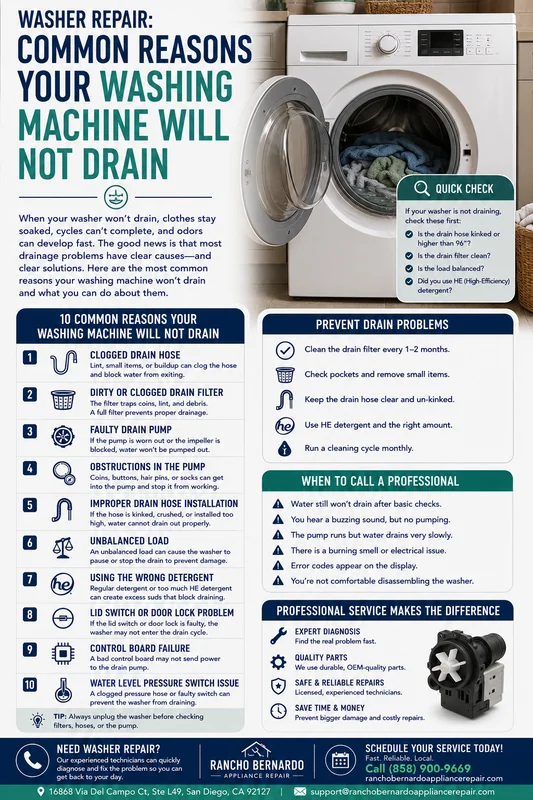
A Clogged Drain Hose
The drain hose carries wastewater from the washer to your home’s plumbing system. Lint, small items, or a kinked hose can block this path completely. Checking and straightening the hose is a simple first step.
A Blocked Drain Pump Filter
Many washers include an accessible filter that catches coins, buttons, and lint before draining. This filter can become fully clogged after months of regular use. Cleaning it is often an easy fix homeowners can do themselves.
A Failing Drain Pump Motor
The drain pump motor pushes water out of the tub at the end of each cycle. A worn or jammed motor may hum without actually moving any water. This part typically requires professional testing and replacement.
A Kinked or Crushed Drain Standpipe
The standpipe connects the washer’s drain hose to your home’s plumbing system. If it is bent, crushed, or improperly installed, drainage becomes restricted significantly. A plumber or technician can inspect this connection.
A Stuck or Failing Lid Switch
Many washers will not drain or spin if the lid switch does not register as closed. A failing switch can prevent the drain cycle from ever starting. Testing this switch is a quick diagnostic step.
Small Items Lodged in the Pump
Coins, buttons, or small socks can travel into the pump and block the impeller. This is one of the most common and easiest to fix causes. Checking pockets before every load helps prevent this issue.
A Malfunctioning Control Board
The control board tells the washer when to start the drain and spin portions of the cycle. A failing board can skip this step entirely, leaving water trapped. This cause is less common but does happen on aging machines.
How to Check the Pump Filter Yourself
Most front load washers have an access panel near the bottom front of the machine. Locate the small drain filter and unscrew it carefully over a shallow pan. Clearing trapped debris often solves the problem immediately.
Is Standing Water Always a Pump Problem?
Not always, since a simple hose kink or overloaded pump filter causes many cases. A completely non functional pump tends to produce no draining sound at all. Listening during the drain cycle helps narrow down the cause.
How a Technician Diagnoses Drainage Failures
A technician checks the hose, filter, pump, and lid switch in a logical sequence. This structured process identifies the true cause rather than guessing. Most drainage diagnoses are completed within a single visit.
Cost Expectations for Common Repairs
Clearing a clogged filter or hose typically costs nothing beyond a few minutes of time. A drain pump replacement represents a more significant, though still reasonable, repair. An accurate diagnosis helps you understand the likely cost.
Preventing Future Drainage Problems
Checking pockets before loading and cleaning the pump filter monthly both help significantly. Avoiding consistently overloaded cycles also protects the pump from unnecessary strain. These habits reduce how often standing water becomes a problem.
What to Do Before the Technician Arrives
Avoid running additional cycles on top of standing water in the tub. Bail out excess water carefully if the machine is completely full. This precaution prevents overflow and protects your laundry room flooring.
How Front Load and Top Load Washers Differ Here
Front load washers typically include an accessible pump filter that top load models often lack. This design difference affects how a technician approaches diagnosis and repair. Knowing your washer type helps set expectations for the visit.
Why This Complaint Is So Common in Busy Households
Households doing frequent laundry naturally accumulate more lint and small debris in the pump. This higher usage explains why a washing machine will not drain more often in larger families. Regular filter cleaning becomes even more valuable in these homes.
When a Second Opinion Is Worth Seeking
If a previous repair did not resolve the issue, a fresh diagnostic look often helps. A different technician may catch a detail the first visit missed. This is a reasonable step for a stubborn, recurring drainage problem.
A washing machine will not drain almost always has a specific, identifiable cause behind it. Rancho Bernardo Appliance Repair has resolved these calls across San Diego County since 2001. Our technicians trace the blockage or failure methodically rather than guessing. Schedule a visit to get your laundry routine back on track quickly.
FAQ: Washing Machine Will Not Drain
What should I check first if my washer will not drain?
Start with the accessible pump filter, usually located behind a small panel at the front. This filter catches debris and is one of the most common causes. Clearing it often resolves the issue within minutes.
Can a small item really block the entire drain system?
Yes, a coin or button lodged in the pump can stop drainage completely. This is one of the more common reasons behind a washing machine will not drain complaint. Checking pockets before every load helps prevent this specific issue.
Is a failing drain pump an expensive repair?
It is a moderate repair, more involved than simply clearing a clogged filter. The cost depends on the specific model and how accessible the pump is. A technician can provide an accurate estimate after diagnosis.
Why would my washer not even attempt to drain?
A stuck lid switch can prevent the drain cycle from starting at all. The washer may seem to pause indefinitely without any pump sound. A technician can test the switch quickly during a visit.
Should I stop using the washer if it will not drain?
It is best to pause use until the standing water and cause are addressed. Continuing to add cycles on top of standing water can cause overflow. A quick inspection prevents this frustrating situation from getting worse.