

Common Reasons Your Ice Maker Stops Making Ice
An ice maker that suddenly stops producing ice is one of the more common refrigerator complaints homeowners report. This issue rarely means the whole refrigerator is failing. Rancho Bernardo Appliance Repair diagnoses an ice maker stops making ice for San Diego County households on a regular basis. Most causes trace back to water supply or a specific failed part.
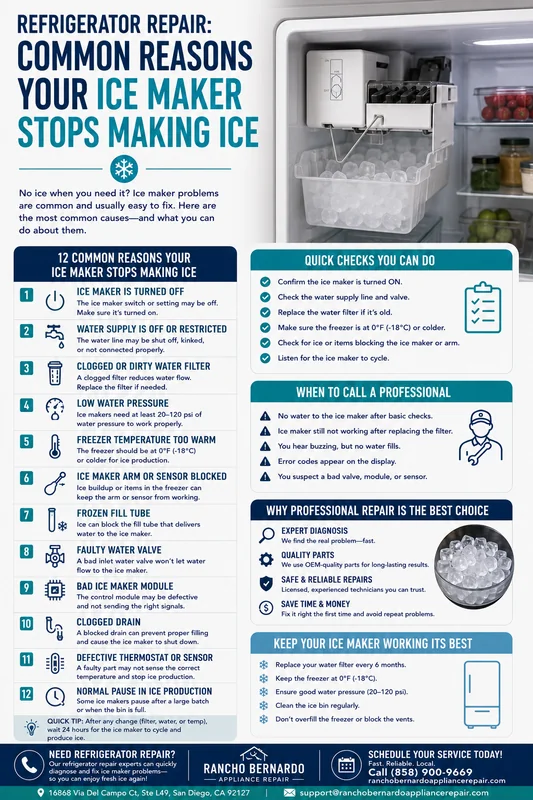
A Frozen or Blocked Water Supply Line
The thin water line feeding the ice maker can freeze if positioned too close to cold air. A frozen line simply cannot deliver water to make new ice. Thawing the line often restores normal function quickly.
A Closed or Faulty Water Supply Valve
The water valve behind the refrigerator controls the flow to the ice maker. A partially closed valve or a failing valve mechanism restricts water delivery. Checking that the valve is fully open is a simple first step.
A Clogged Water Filter
Most modern refrigerators require regular water filter replacement for both dispensing and ice making. A clogged filter can restrict flow enough to stop ice production entirely. Replacing the filter on schedule prevents this common cause.
A Failing Ice Maker Assembly
The ice maker unit itself contains a motor and mechanism to eject ice cubes. Years of use can wear down this assembly until it stops functioning. Replacing the ice maker assembly is a common and effective repair.
The Ice Maker Arm Is Turned Off
Most ice makers include a small arm or switch that can be manually turned off. This is sometimes bumped accidentally or turned off intentionally and forgotten. Checking this switch is a free step worth trying first.
A Malfunctioning Thermostat Inside the Freezer
The ice maker requires the freezer to reach a specific temperature before it will cycle. A freezer running too warm prevents the ice making process from starting. This ties the issue back to overall freezer cooling performance.
Mineral Buildup Restricting Water Flow
Hard water common in parts of San Diego County can leave mineral deposits inside the water line. This buildup gradually restricts flow even without a full blockage. Periodic line flushing helps prevent this slow decline.
A Failing Water Inlet Valve
This valve controls water flow into the entire refrigerator, including the ice maker circuit. A failing valve can affect ice production even when other water supply seems fine. Testing this part rules in or out this specific cause.
How to Reset Your Ice Maker
Many ice makers have a reset button or sequence specific to that model. Consulting your owner’s manual for the correct reset process is worth trying first. This simple step occasionally resolves minor electronic glitches.
When the Issue Points to the Whole Freezer
If ice production stops alongside general freezer warming, the cause is likely broader than the ice maker itself. This pattern suggests checking overall cooling performance first. A technician can determine whether this is the case.
How a Technician Diagnoses This Complaint
A technician checks the water supply, valve, filter, and ice maker assembly in sequence. This structured process identifies the true cause rather than guessing. Most diagnostic visits are completed within a single appointment.
Cost Expectations for Common Repairs
A water filter replacement is typically the most affordable fix available. A full ice maker assembly replacement represents a moderate, still reasonable repair cost. An accurate diagnosis helps set realistic expectations.
Preventing Future Ice Maker Problems
Replacing the water filter on the manufacturer’s recommended schedule prevents many common issues. Keeping the freezer at the proper temperature also supports reliable ice production. These habits meaningfully reduce future ice maker complaints.
How Long an Ice Maker Repair Typically Takes
Most water supply or filter fixes finish within a single short visit. An assembly replacement takes a bit longer due to added disassembly. A technician can estimate timing after confirming the diagnosis.
Why Some Households Notice This More in Summer
Higher ice usage in warmer months makes production issues more noticeable. A slowly failing component might go unnoticed during cooler seasons. This seasonal pattern is worth keeping in mind.
What to Tell a Technician When You Call
Mention when ice production stopped and whether the freezer still feels cold. Note any recent filter changes or unusual sounds. These details help a technician prepare for a more efficient visit.
Why DIY Ice Maker Repairs Carry Some Risk
The ice maker assembly involves both water lines and electrical parts working together closely. Attempting repairs without proper knowledge can lead to water damage. Professional service avoids these complications.
When an ice maker stops making ice, the cause is almost always a specific, fixable part. Rancho Bernardo Appliance Repair has resolved these calls across San Diego County since 2001. Our technicians check the water supply and components methodically to find the real issue. Schedule a visit to get consistent ice production back in your kitchen.
FAQ: Ice Maker Stops Making Ice
What should I check first if my ice maker stopped working?
Check that the small arm or switch on the ice maker has not been turned off. Also confirm the water supply valve behind the fridge is fully open. These two checks take only a few minutes and cost nothing.
How often should I replace my refrigerator's water filter?
Most manufacturers recommend replacing the filter every six months for consistent performance. A clogged filter is a common reason an ice maker stops making ice. Setting a reminder helps keep this maintenance on schedule.
Can a frozen water line really stop ice production?
Yes, if the line is positioned too close to cold air, it can freeze solid. A frozen line simply cannot deliver water to the ice maker. Thawing the line, sometimes with a hair dryer, often restores function.
Is it normal for ice makers to eventually wear out?
Yes, the mechanical assembly inside an ice maker does wear down after years of cycling. This is a normal part of the appliance’s lifespan, not a sign of misuse. Replacing the assembly is a common, straightforward repair.
Why does my freezer seem fine but ice production has stopped?
This pattern often points to a specific ice maker component rather than overall cooling. The water supply, valve, or ice maker assembly are the most likely causes. A technician can narrow this down during a diagnostic visit.