Tips to Keep Your Wine Cooling System Working Efficiently
A wine cellar’s cooling system needs to maintain precise, stable conditions to protect a valuable collection. Even small fluctuations can affect wine quality over time. Rancho Bernardo Appliance Repair helps San Diego County wine collectors maintain wine cooling system efficiency year round. A few consistent habits go a long way toward protecting both the system and the wine inside.
Keep Condenser Coils Clean
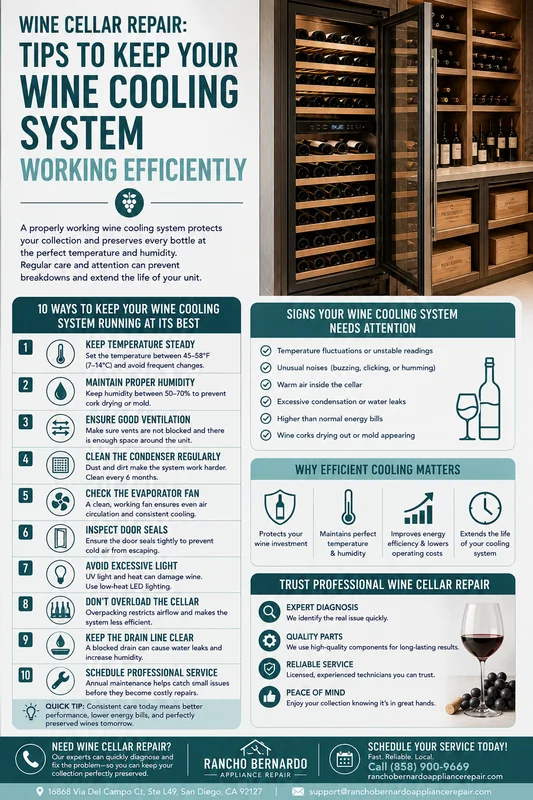
Dust and debris buildup on condenser coils forces the cooling system to work harder. This reduces efficiency and can shorten the compressor’s overall lifespan. Cleaning coils every few months keeps the system running smoothly.
Maintain Proper Clearance Around the Unit
Wine cooling units need adequate space around them to release heat effectively. Cabinetry or storage placed too closely restricts this necessary airflow. Following manufacturer clearance guidelines protects overall performance.
Check Door Seals Regularly
A worn door seal lets warm air infiltrate the climate controlled space continuously. This forces the cooling system to run more often just to maintain temperature. Inspecting the seal for cracks or gaps catches this issue early.
Monitor Temperature and Humidity Consistently
Wine cellars typically require both stable temperature and appropriate humidity levels. A dedicated monitoring system alerts you to fluctuations before they affect the collection. This proactive approach catches developing problems quickly.
Avoid Overpacking the Storage Space
Bottles packed too tightly can restrict airflow within the cooling unit itself. This creates uneven temperature zones throughout the storage space. Leaving reasonable space allows the system to circulate air evenly.
Schedule Annual Professional Maintenance
A yearly inspection catches small issues before they affect your wine collection’s condition. Technicians can test refrigerant levels, calibration, and component wear during this visit. This preventive step protects a potentially significant investment.
Understand Your System’s Expected Lifespan
Wine cooling units typically last between eight and twelve years with proper maintenance. Knowing your system’s age helps you anticipate when repairs might become more frequent. This awareness supports better long term planning.
Watch for Unusual Noises or Vibration
A wine cooling system should run relatively quietly during normal operation. New or unusual noises often signal a component beginning to wear down. Addressing noise early prevents more significant compressor damage.
Recognize Signs of Declining Efficiency
A system running constantly without reaching its target temperature signals declining performance. Rising energy bills related to the unit can also indicate the same issue. These signs of reduced wine cooling system efficiency deserve prompt attention.
Protect the System From Location Related Heat
Wine cellars located near kitchens, garages, or south facing walls face additional heat exposure. This extra thermal load can strain the cooling system beyond normal expectations. Considering placement during installation prevents this ongoing challenge.
Address Small Issues Before They Escalate
A minor temperature fluctuation caught early is far easier to resolve than a full system failure. Waiting until the collection is already affected raises the stakes considerably. Prompt attention to small changes protects your investment.
How Technicians Diagnose Wine Cooling Issues
A technician checks coils, seals, refrigerant levels, and calibration during a thorough inspection. This comprehensive approach identifies efficiency losses before they become serious problems. Most diagnostic visits are completed within a single appointment.
Why Professional Service Matters for Wine Collections
Given the value many collections represent, professional maintenance is a worthwhile ongoing investment. Experienced technicians understand the precise requirements these systems demand. This expertise helps protect both the equipment and what it stores.
Common Repairs That Restore Efficiency
Coil cleaning, seal replacement, and refrigerant recharging are among the most common efficiency related repairs. Each addresses a different piece of the overall cooling puzzle. A technician determines which combination applies to your specific system.
Seasonal Considerations for San Diego County Cellars
Warmer months place additional strain on wine cooling systems throughout the region. Scheduling a checkup before summer helps the system handle this seasonal demand. This timing mirrors the preventive approach many homeowners take with home cooling.
Maintaining wine cooling system efficiency protects both your equipment and the collection it houses. Rancho Bernardo Appliance Repair has serviced wine cellars across San Diego County since 2001. Our technicians understand the precise demands these specialized systems require. Schedule a maintenance visit to keep your wine cellar performing at its best.
FAQ: Wine Cooling System Efficiency
How often should I clean my wine cooler's condenser coils?
Cleaning every three to four months is a reasonable standard for most homes. Dustier environments may benefit from slightly more frequent attention. This simple habit meaningfully protects overall system performance.
What temperature fluctuation is considered a problem?
Swings of more than a few degrees from your target setting are worth investigating. Consistent, stable temperature is essential for protecting wine quality over time. A monitoring system helps catch these fluctuations early.
Can a wine cellar be too small for its cooling unit?
Yes, a mismatch between room size and cooling capacity affects wine cooling system efficiency significantly. An undersized or oversized unit both struggle to maintain stable conditions. A technician can evaluate whether your setup is properly matched.
Is annual maintenance really necessary for a wine cooling system?
Yes, given the value many collections represent, this small investment protects a much larger one. Annual visits catch efficiency losses before they affect stored wine. This proactive approach is standard practice among serious collectors.
What should I do if I notice a musty smell in the cellar?
A musty smell can indicate humidity levels are outside the ideal range. This is worth investigating alongside your cooling system’s overall performance. A technician can check both temperature and humidity control together.