

Common Reasons Your Dryer Is Making Loud Noises
A dryer that suddenly starts thumping, squealing, or grinding can turn laundry day into a stressful guessing game. Most noise complaints trace back to a handful of worn parts rather than a failing motor. Rancho Bernardo Appliance Repair technicians hear about a dryer making loud noises on nearly every service route. These calls come from homes across San Diego County. Understanding what each sound usually means helps you decide how urgently to call for help.
A Rhythmic Thumping Sound
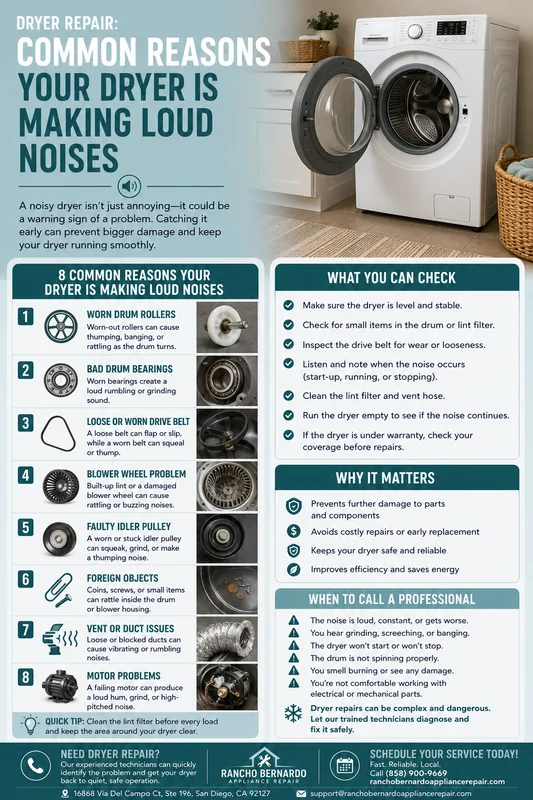
Thumping that repeats with each drum rotation often means something solid is tumbling inside. A shoe or a stray button is a common culprit. It can also point to a worn drum support roller that no longer spins smoothly. Emptying pockets before every load prevents the simplest version of this problem.
A High Pitched Squeal or Screech
Squealing usually comes from a worn drum belt or a dry idler pulley that needs lubrication. These parts wear out gradually after years of friction and heat exposure. A technician can replace the belt or pulley in a relatively short visit without touching the rest of the machine.
A Grinding or Scraping Noise
Grinding often signals that the drum support rollers or the rear drum bearing have worn down completely. Metal parts rubbing together create a harsh, gritty sound that gets louder over time. Continuing to run the dryer this way risks damaging the drum itself and increasing repair costs.
Loud Rattling During the Cycle
Rattling can come from loose screws on an access panel or from lint trapped near the blower wheel. It sometimes indicates a small object lodged between the drum and the cabinet wall. This is one of the easier noises to diagnose during a routine inspection visit.
A Buzzing Sound When the Dryer Starts
Buzzing right at startup often points toward the motor or a failing start capacitor struggling to engage. If the drum hesitates or seems slow to begin spinning, the motor bearings may be wearing out. This symptom is worth addressing quickly before the motor stops working entirely.
Loud Vibration Against the Wall or Floor
Excessive vibration usually means the dryer is not sitting level or the leveling feet have shifted over time. It can also happen when the load is unbalanced or too heavy for one cycle. Checking that all four feet sit firmly on the floor is a simple first step.
Clicking Sounds Between Cycles
Occasional clicking as the dryer heats and cools is normal for many models and nothing to worry about. Rapid or continuous clicking, however, can point to a failing timer motor or control relay. A technician can quickly tell the difference during a diagnostic check.
Why Ignoring the Noise Costs More Later
Worn rollers, belts, and bearings rarely fix themselves and tend to fail completely without warning. A small part replaced early is almost always cheaper than motor damage. Months of a dryer making loud noises left unaddressed usually leads to that exact outcome. Addressing noise early keeps your dryer running for years longer.
How a Technician Diagnoses Dryer Noise
A technician typically removes the front or rear panel to inspect the drum rollers, belt, and bearing directly. Running the drum by hand often reveals exactly where resistance or wobble is coming from. This hands on check pinpoints the cause faster than guessing from the sound alone.
Preventive Maintenance That Reduces Wear
Cleaning the lint trap before every load and clearing the vent yearly reduces strain on the motor and belt. Avoiding overloaded cycles also protects the drum support rollers from excess weight over time. These habits are simple, free, and genuinely extend a dryer’s working life.
Cost Considerations for Common Noise Repairs
Belt and roller replacements are typically among the more affordable dryer repairs a technician performs. Motor or drum bearing issues tend to cost more due to the additional labor involved. Getting an accurate diagnosis first helps you budget appropriately before committing to a repair.
When Noise Means It Is Time for a New Dryer
An older dryer with a failing motor and several other aging parts may not be worth extensive repair costs. A technician can compare the repair estimate against the cost of a new unit honestly. This comparison helps you make a confident decision either way.
Choosing the Right Repair Partner
A technician who explains the cause in plain language builds trust fast. Ask whether the part causing the noise is covered under any existing warranty. Rancho Bernardo Appliance Repair walks every customer through the diagnosis before starting repairs. There are never surprises on the final bill.
A dryer making loud noises is trying to tell you something before it breaks down completely. Rancho Bernardo Appliance Repair has diagnosed noisy dryers across San Diego County since 2001. Our experience covers every major brand on the market. Our technicians identify the exact worn part instead of replacing components by guesswork. Call before that squeal or thump turns laundry day into an unexpected repair bill.
FAQ: Dryer Making Loud Noises
What does a squealing sound usually mean in a dryer?
A high pitched squeal almost always comes from a worn drum belt or a dry idler pulley that needs lubrication. Both parts wear down gradually after years of friction and heat inside the drum area. A technician can replace either part in a fairly short visit without touching the rest of the machine.
Is it safe to keep running a dryer that grinds loudly?
Continuing to run a dryer making loud noises with a grinding sound risks damaging the drum and surrounding components. Worn rollers or bearings tend to fail suddenly once the grinding becomes severe. It is safer to stop using the machine and schedule a repair before that happens.
Why does my dryer thump with every rotation?
Rhythmic thumping often means a stray item, like a button or coin, is tumbling loose inside the drum. It can also point to a worn drum support roller that no longer spins smoothly against the drum edge. Checking pockets before every load prevents the simplest version of this common complaint.
Can a dryer noise be caused by something as simple as leveling?
Yes, strong vibration and rattling noises often trace back to a dryer that is not sitting level on the floor. Loose or shifted feet let the entire cabinet shake during the spin portion of the cycle. Checking that all four feet sit firmly on the ground is a quick first step.
How much does it cost to fix a noisy dryer?
Cost depends heavily on the part involved. A belt or pulley replacement is far cheaper than a full drum bearing repair. Getting an accurate diagnosis first prevents paying for parts that were never actually worn. Most noise related repairs are completed within a single visit.