

Why the Freezer Is Cold but the Refrigerator Is Warm
It seems strange at first: the freezer keeps ice cream rock solid while the fridge section barely feels cool. This mismatch is actually one of the more common refrigerator complaints technicians see. Rancho Bernardo Appliance Repair regularly diagnoses a freezer cold but refrigerator warm for families across San Diego County. The cause almost always lies in how cold air moves between the two compartments.
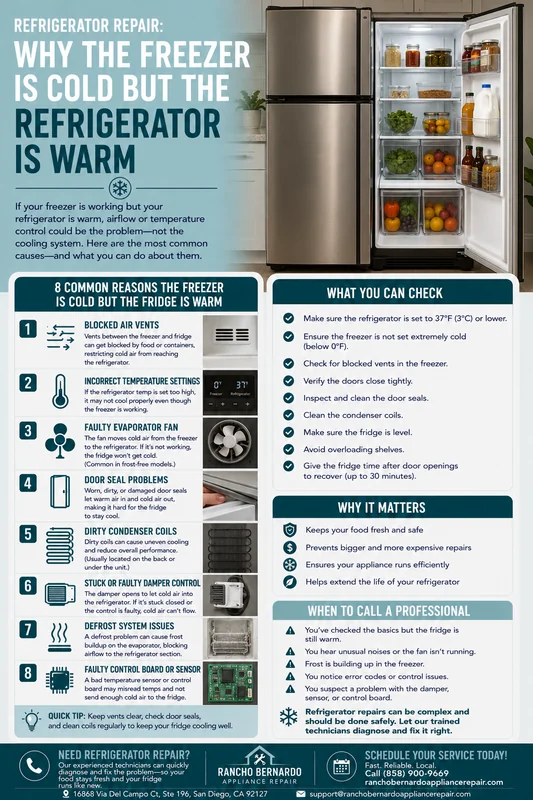
A Blocked or Frozen Evaporator Coil
The evaporator coil, hidden behind the freezer’s back wall, generates the cold air for the entire refrigerator. When ice builds up on this coil, airflow to the fresh food section gets restricted significantly. This is one of the single most common causes of this exact complaint.
A Failing Evaporator Fan Motor
This small fan pushes cold air from the freezer compartment down into the refrigerator section below. When the motor weakens or stops entirely, the freezer stays cold while the fridge slowly warms up. A faint clicking or humming near the freezer back wall often signals this failure.
A Stuck or Damaged Damper Control
The damper is a small door that opens and closes to regulate how much cold air enters the fridge. If it gets stuck in the closed position, cold air simply cannot reach the refrigerator compartment. This part is small but plays an outsized role in overall cooling balance.
A Malfunctioning Thermistor or Sensor
The thermistor measures temperature and reports it to the control board, which then adjusts airflow accordingly. A faulty reading can cause the system to prioritize the freezer while neglecting the fridge section entirely. Replacing this small sensor often restores proper balance quickly.
Frost Buildup from a Failing Door Seal
A worn freezer door seal lets warm air in, which then refreezes on the evaporator coil over time. This ice buildup gradually restricts airflow meant for the refrigerator side of the unit. Checking both door seals is a simple step during any diagnostic visit.
An Overworked Defrost System
Refrigerators periodically defrost the evaporator coil automatically to prevent exactly this kind of ice buildup. A failing defrost heater, timer, or thermostat allows frost to accumulate unchecked between cycles. This system failure is a frequent underlying cause of uneven cooling.
Vents Blocked by Stored Food
Even with everything else working properly, food packed too tightly against internal vents can block airflow. This is especially common in the back corners of both the freezer and fridge compartments. Rearranging items to keep vents clear costs nothing and sometimes solves the issue instantly.
Why Professional Diagnosis Saves Money
Several different parts can cause this exact same symptom, which makes guessing an expensive approach. A technician can test the fan, damper, and sensors in one visit to find the actual cause. This targeted approach avoids paying for parts that were never the problem.
How a Technician Diagnoses This Specific Complaint
A technician typically checks the evaporator fan and damper first before inspecting the defrost system components. Testing airflow directly at the vents helps confirm exactly where cold air is being restricted. This ordered process usually identifies the cause within a single visit.
Preventive Maintenance That Reduces Airflow Failures
Checking both door seals regularly and avoiding overpacked shelves helps maintain proper airflow between compartments. Keeping the freezer reasonably stocked, but not overcrowded, also supports consistent evaporator fan performance. These habits reduce how often this specific complaint develops.
Cost Expectations for Common Repairs
Replacing an evaporator fan motor or damper is typically a moderate, affordable repair for most households. Defrost system repairs involving the heater or timer tend to cost a bit more due to added labor. An accurate diagnosis helps you understand which category applies to your unit.
Protecting Food Safety While You Wait for Service
Keep the refrigerator section closed as much as possible while cold air remains restricted from reaching it. Moving temperature sensitive items to the colder freezer section temporarily can help preserve them longer. This step matters most in the hours before a technician arrives.
How This Differs From a Fully Broken Fridge
A completely warm refrigerator with no cold air anywhere points to a different problem, like a failed compressor. A freezer cold but refrigerator warm situation specifically means part of the system still works correctly. This distinction narrows down the likely cause significantly before a technician even arrives.
A freezer cold but refrigerator warm situation always has a specific, findable cause behind it. Rancho Bernardo Appliance Repair has resolved this exact complaint for San Diego County households since 2001. Our technicians test the airflow system methodically instead of replacing parts on a hunch. Schedule a visit to restore even cooling throughout your entire refrigerator.
FAQ: Freezer Cold But Refrigerator Warm
What is the most common cause of this exact problem?
A blocked or frozen evaporator coil behind the freezer’s back wall is the single most common cause. Ice buildup on this coil restricts the airflow meant to reach the refrigerator compartment below. This single issue explains a large share of calls about a freezer cold but refrigerator warm.
Could a small fan really affect the whole refrigerator?
Yes, the evaporator fan is responsible for pushing cold air from the freezer down into the fridge section. When this small motor fails, the freezer stays cold while the refrigerator slowly warms up. A faint clicking or humming near the freezer back wall often signals this exact failure.
Is this problem related to the defrost system at all?
Often, yes, since a failing defrost heater or timer allows frost to build up unchecked on the coil. That buildup then blocks the airflow the refrigerator section depends on for consistent cooling. This system failure is a frequent underlying cause behind uneven temperatures.
Can rearranging food in the fridge actually help?
Sometimes, since food packed tightly against internal vents can block airflow even when every part works correctly. This is especially common in the back corners of both the freezer and fridge compartments. Clearing the vents costs nothing and is worth trying before scheduling a repair.
Why does this issue need a technician instead of guessing?
Several different parts, including the fan, damper, and sensors, can all cause this identical symptom on their own. Testing each one individually is the only reliable way to find the true cause. This targeted approach avoids paying for parts that were never actually the problem.