Why Your Furnace Keeps Turning On and Off
A furnace that cycles rapidly without completing a full heating run is working inefficiently. This pattern, known as short cycling, puts real strain on the system over time. Rancho Bernardo Appliance Repair diagnoses why a furnace keeps turning on and off for San Diego County households regularly. Most causes are identifiable during a routine inspection.
A Dirty or Clogged Air Filter
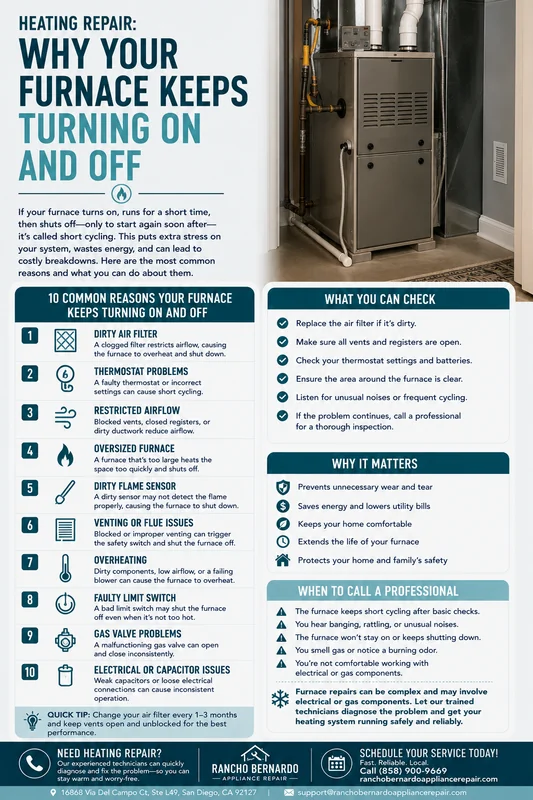
A blocked filter restricts airflow, causing the system to overheat and shut down early. This is one of the simplest and most common causes of short cycling. Replacing the filter monthly during heavy use season prevents this issue.
An Oversized Furnace for the Space
A furnace too large for the home heats the space quickly and shuts off fast. This mismatch causes frequent cycling even when every component works correctly. This issue traces back to the original installation rather than a failing part.
A Failing Flame Sensor
The flame sensor confirms the burner has ignited before allowing the system to keep running. A dirty or failing sensor can cause the system to shut down prematurely. Cleaning or replacing this small part often resolves the cycling.
A Malfunctioning Thermostat
A thermostat reading temperature inaccurately can call for heat repeatedly in short bursts. This creates a pattern that looks like a furnace problem but starts elsewhere. Testing the thermostat is a quick step during diagnosis.
An Overheating Limit Switch Activating
The high limit switch shuts the furnace off if internal temperatures rise too high. Frequent triggering of this switch points to an airflow or overheating problem elsewhere. This is more of a symptom than a root cause on its own.
Cracked or Leaking Ductwork
Air escaping through gaps in the ducts reduces heating efficiency throughout the home. The system compensates by running more often in shorter bursts. Sealing duct leaks improves both comfort and cycling patterns.
A Failing Blower Motor
The blower motor circulates heated air throughout the home during each cycle. A weakening motor cannot move enough air, triggering the same overheating shutdown. This part failure often develops gradually before becoming obvious.
Why Short Cycling Increases Energy Bills
Each restart uses more energy than a system that reaches a full, complete cycle. This inefficiency adds up significantly over an entire heating season. Homeowners often notice this pattern first through a rising utility bill.
How Technicians Diagnose Short Cycling
A technician checks the filter, sensors, and airflow in a logical sequence during inspection. This process identifies whether the cause is simple maintenance or a failing part. Most diagnostic visits are completed within about an hour.
Preventing Short Cycling Through Regular Maintenance
Annual professional tune ups catch small issues before they cause frequent cycling. Replacing filters on schedule protects airflow throughout the entire heating season. These habits meaningfully extend the life of your heating system.
How Installation Quality Affects Cycling Patterns
A furnace sized or installed incorrectly can short cycle even when every part works fine. This issue traces back to the original installation rather than a failing component. A technician can evaluate whether sizing is contributing to the problem.
Comparing Short Cycling to Normal Cold Weather Cycling
A healthy furnace runs longer, complete cycles on especially cold days, which is normal. Short cycling looks and sounds different, with rapid restarts regardless of outdoor temperature. Knowing this difference helps you decide when to call for help.
What a Technician Checks First on Arrival
A technician typically inspects the filter and vents before opening the unit itself. This quick check rules out the simplest causes within the first few minutes. Deeper component testing follows only if these basics check out fine.
Long Term Effects of Ignoring Short Cycling
Repeated restarts wear down the blower motor and ignition components faster than normal use. Left unaddressed, a furnace keeps turning on and off pattern often leads to a complete breakdown. Early repair protects the system’s overall lifespan.
Why Homeowners Often Wait Too Long
Short cycling can feel like a minor annoyance rather than a real problem at first. This perception often delays a repair that would have been quick and affordable. Recognizing the pattern early changes that outcome significantly.
When a furnace keeps turning on and off, the system is telling you something needs attention. Rancho Bernardo Appliance Repair has resolved short cycling issues across San Diego County since 2001. Our technicians identify the true cause instead of just resetting the system. Schedule a visit to restore efficient, complete heating cycles.
FAQ: Furnace Turning On and Off Repeatedly
Is short cycling dangerous for my furnace?
It is not immediately dangerous, but it does strain components significantly over time. Continued short cycling accelerates wear on the blower motor and other parts. Addressing the cause sooner protects the system’s overall lifespan.
Can a dirty filter alone cause my furnace to short cycle?
Yes, a clogged filter is one of the most common reasons a furnace keeps turning on and off. Restricted airflow causes the system to overheat and shut down as a safety measure. Replacing the filter often solves this exact problem.
Why would an oversized furnace cause this issue?
A furnace too large for the home heats the space faster than intended. This causes it to shut off quickly, then restart soon after. This mismatch traces back to installation rather than a specific broken part.
How can I tell if the thermostat is causing the cycling?
An inaccurate thermostat calls for heat in short, repeated bursts rather than steady runs. Comparing the thermostat reading to a separate room thermometer can reveal a discrepancy. A technician can test and calibrate the thermostat during a visit.
Will regular maintenance really prevent this from happening?
Yes, annual tune ups catch small issues like dirty sensors or minor duct leaks. These small problems are often the root cause behind short cycling. Preventive maintenance is consistently cheaper than repeated emergency repairs.