Warning Signs Your Heating System May Be Failing
A heating system rarely fails without giving some warning first. Catching these clues early can mean a simple repair instead of a cold night with no heat. Rancho Bernardo Appliance Repair helps San Diego County homeowners recognize heating system warning signs before a full breakdown happens. Knowing what to watch for puts you ahead of the problem.
Uneven Heating Throughout the House
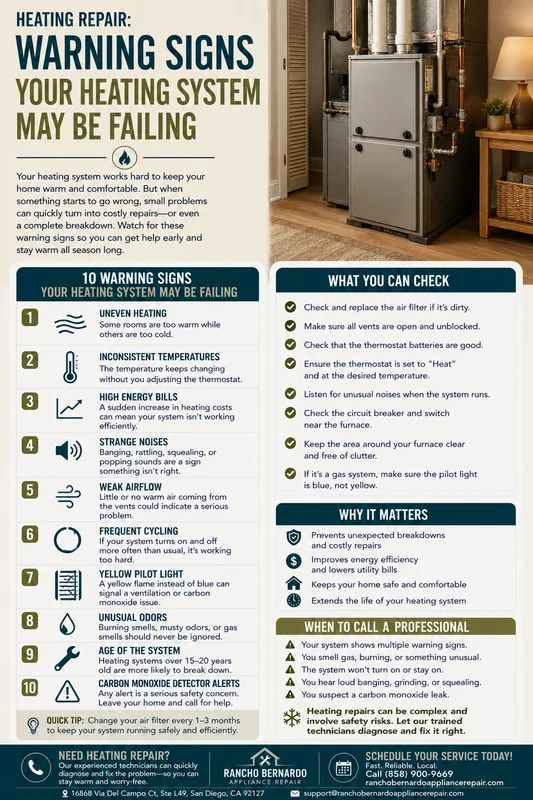
Some rooms feeling noticeably colder than others often points to duct or airflow problems. It can also signal a failing blower motor struggling to distribute air evenly. This unevenness tends to worsen gradually rather than appear overnight.
Strange Noises From the Furnace
Banging, rattling, or squealing sounds during startup are rarely normal for a healthy system. These noises often point to a loose part or a worn blower belt. Addressing noise early prevents more expensive component damage later.
A Yellow Instead of Blue Pilot Flame
A healthy gas furnace burns with a steady blue flame at the pilot light. A yellow or flickering flame can indicate incomplete combustion or a ventilation issue. This warning sign deserves prompt professional attention for safety reasons.
Rising Energy Bills Without Explanation
A struggling heating system often runs longer and less efficiently to reach the same temperature. This shows up first on your monthly utility bill before other symptoms appear. Comparing bills year over year can reveal this trend early.
The System Short Cycles On and Off
A furnace that turns on and off frequently without completing a full heating cycle is working inefficiently. This short cycling puts extra strain on the components with every restart. It is one of the more common heating system warning signs homeowners report.
A Noticeable Increase in Dust Around Vents
More dust than usual around vents can point to a failing air filter or ductwork issue. This buildup circulates throughout the house every time the system runs. Checking and replacing filters regularly helps rule out this simple cause.
The Age of Your Heating System Matters
Most furnaces last between fifteen and twenty years with proper maintenance. A system nearing this age is statistically more likely to show early warning signs. Age alone is worth factoring into any repair versus replacement decision.
A Burning Smell When the System Starts
A brief dusty smell at the start of the season is usually normal and fades quickly. A persistent or strong burning smell, however, warrants immediate attention. This could indicate an electrical or component issue needing prompt inspection.
Delayed Response to Thermostat Changes
A system that takes an unusually long time to respond after adjusting the thermostat may be struggling internally. This delay often points to an aging component losing efficiency. A technician can test response times during a diagnostic visit.
Why Annual Maintenance Catches Issues Early
A yearly inspection often finds small issues long before they become obvious warning signs. Technicians check components that are easy to overlook during daily use. This proactive approach tends to be far cheaper than emergency repairs.
When to Call for Professional Help
Any combination of these warning signs is worth a professional diagnostic visit. Waiting until the system fails completely often means a colder wait for repairs. Acting on early signs keeps your home comfortable through the full season.
How Weather Changes Reveal Hidden Issues
The first cold snap often exposes problems that built up quietly over summer. A system that struggles that first cold night deserves a closer look. This is one reason fall maintenance visits are so valuable.
The Role of Ductwork in Overall Performance
Even a perfectly healthy furnace cannot heat a home well through leaky or blocked ducts. Some heating system warning signs actually originate outside the furnace itself. A full inspection considers the ductwork alongside the unit.
Comparing Gas and Electric Heating Symptoms
Gas systems show unique signs, like flame color, that electric systems simply do not have. Electric systems more often reveal problems through breaker trips or reduced airflow. Knowing your system type helps you watch for the right clues.
Budgeting for Heating System Repairs
Simple fixes, like a sensor or filter, cost far less than a blower motor replacement. Setting aside a small maintenance budget each year helps absorb these costs comfortably. A technician can give a clear estimate before any work begins.
Why Waiting Rarely Pays Off
A heating system showing early symptoms rarely improves without attention. Waiting typically means the eventual repair costs more than it would have. Acting on the first sign is almost always the more affordable path.
Recognizing heating system warning signs early gives you time to schedule a repair on your own terms. Rancho Bernardo Appliance Repair has serviced heating systems across San Diego County since 2001. Our technicians inspect every major component to catch problems before they become emergencies. Schedule a checkup before the next cold snap arrives.
FAQ: Heating System Warning Signs
What is the very first sign most homeowners notice?
Uneven heating between rooms is usually the first thing people notice. This often shows up gradually rather than all at once. Comparing room temperatures with a simple thermometer can confirm the pattern early.
Is a short cycling furnace dangerous to keep running?
It is not usually dangerous immediately, but it does strain the system significantly. Continuing to run a short cycling furnace accelerates wear on major components. Scheduling a repair sooner rather than later protects the system’s lifespan.
How often should I schedule a heating system inspection?
Once a year, ideally before the cooler months begin, is the standard recommendation. This timing catches heating system warning signs before they turn into no heat emergencies. Annual visits are typically quick and affordable compared to emergency repairs.
Can a dirty air filter really cause these symptoms?
Yes, a clogged filter restricts airflow and forces the system to work much harder. This alone can cause uneven heating and rising energy bills. Checking and replacing filters monthly is one of the easiest preventive habits.
Should I worry about a burning smell every single time?
A brief dusty smell at the very start of the season is usually harmless. A strong or lingering burning smell, however, should never be ignored. Turning off the system and calling a technician is the safer choice.