

Miele Refrigerator Has Excessive Frost on the Back Wall — Possible Defrost Heater or Temperature Sensor Failure
A layer of frost on the back wall of a Miele refrigerator may seem like a minor inconvenience at first, especially if the appliance is still keeping food cold. When the frost becomes thick, spreads across a large part of the back wall, or returns shortly after being removed, however, it usually indicates that something is interfering with the refrigerator’s normal cooling and defrost process.
Modern Miele refrigerators are designed to manage frost automatically. During normal operation, moisture inside the cabinet can condense and freeze on cold surfaces. The appliance periodically runs a defrost cycle to remove accumulated ice and maintain proper airflow. If this process stops working correctly, frost can continue to build up until it begins affecting the refrigerator’s performance.
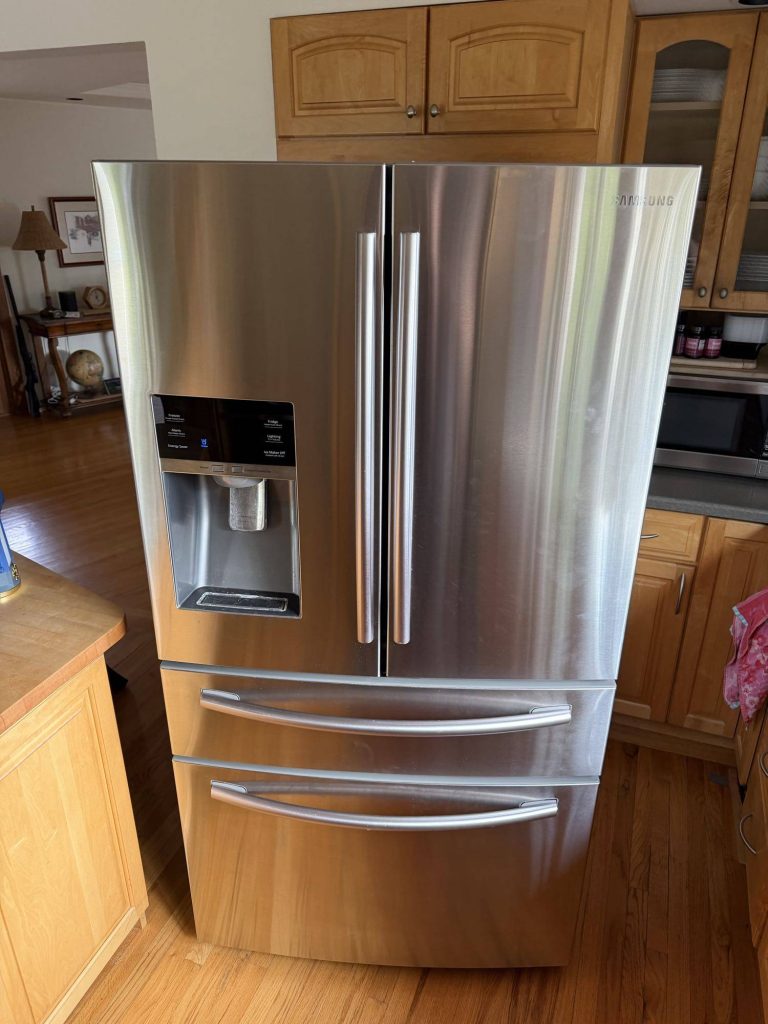
One possible cause is a failed defrost heater. The heater is responsible for producing the heat needed to melt frost from the evaporator area during the automatic defrost cycle. When the heater is open, damaged, or otherwise unable to operate, the ice that normally melts during defrosting remains in place. Over several cycles, the amount of frost can increase significantly.
A refrigerator with a defrost heater problem may initially appear to work normally. The compressor can continue running, and the interior temperature may remain acceptable for a while. As ice accumulates, though, airflow becomes increasingly restricted. Cold air cannot circulate properly through the refrigerator, and some areas may become colder while others become noticeably warmer. The appliance may also need to run for longer periods to maintain the selected temperature.
The temperature sensor is another component worth checking when excessive frost appears on the rear wall. The sensor monitors the temperature inside the appliance and communicates that information to the electronic control system. The control system uses these readings to determine how the refrigerator should operate, including when cooling and defrost functions need to run. If the sensor provides inaccurate information, the refrigerator may not initiate the defrost cycle at the appropriate time.
A sensor failure does not always produce an obvious error message. In some cases, the refrigerator simply behaves differently from normal.
The temperature may fluctuate, the compressor may operate for unusually long periods, or frost may gradually become heavier even though the settings have not changed. This is why checking the sensor and its resistance or electrical readings can be more useful than assuming that the visible frost is the only problem.
The location and appearance of the frost can also provide useful information. A thin, relatively even layer that disappears during normal operation can be part of the refrigeration process. Heavy ice concentrated on the back wall is more concerning, particularly when it continues to accumulate. If the frost is accompanied by inconsistent temperatures, poor airflow, or food freezing in unexpected areas, the refrigerator should be inspected rather than repeatedly defrosted.
There are also simpler issues that can contribute to frost formation. A refrigerator door that does not close properly can allow warm, humid air to enter the cabinet. Damaged or compressed door gaskets can create a similar problem. Every time warm air enters, moisture can condense and freeze on cold surfaces. If the gasket is not sealing correctly, even a properly functioning defrost system may have difficulty keeping up with the additional moisture.
Airflow problems should also be considered. Food placed directly against the rear wall can interfere with circulation and may increase condensation or freezing in that area. Vents should remain unobstructed, and the refrigerator should not be packed so tightly that cold air cannot move through the cabinet. These checks are simple, but they can help distinguish an operating issue from a component failure.
Repeatedly scraping the ice away is usually not a permanent solution. It may restore some airflow temporarily, but the frost will return if the underlying defrost or temperature-control problem remains. Sharp objects should never be used to remove ice because they can damage internal surfaces, tubing, or other components. Turning the refrigerator off and allowing it to defrost naturally can remove the immediate ice buildup, but it does not identify why the frost formed in the first place.
Proper diagnosis requires testing the components involved in the defrost system and checking the refrigerator’s operating conditions. A technician may inspect the defrost heater, temperature sensor, wiring, control components, door gasket, and airflow path. Electrical testing can help determine whether a component is functioning within its expected range rather than replacing parts based only on the appearance of the frost.
It is also important to consider the refrigerator’s overall cooling performance. Excessive frost can restrict airflow enough to make the appliance work harder and run for longer periods. If the problem continues, food may not be stored at a consistent temperature, and the refrigerator may eventually struggle to maintain the selected setting.
If your Miele refrigerator has developed heavy frost on the back wall, especially if the ice keeps returning after defrosting, professional appliance service can help identify the actual cause. A proper inspection can determine whether the problem is connected to the defrost heater, temperature sensor, door seal, airflow, or another component and prevent unnecessary part replacement. Contact a qualified appliance repair service to have the refrigerator diagnosed and restored to normal operation.