Common Reasons Your Oven Heats Unevenly
Baked goods that turn out burnt on one side and pale on the other point to a heating problem. This is rarely a recipe issue. Uneven baking frustrates home cooks and often gets worse over time. Rancho Bernardo Appliance Repair regularly diagnoses why an oven heats unevenly for households throughout San Diego County. A few specific parts are usually responsible, and most are simple to identify.
A Failing Bake or Broil Element
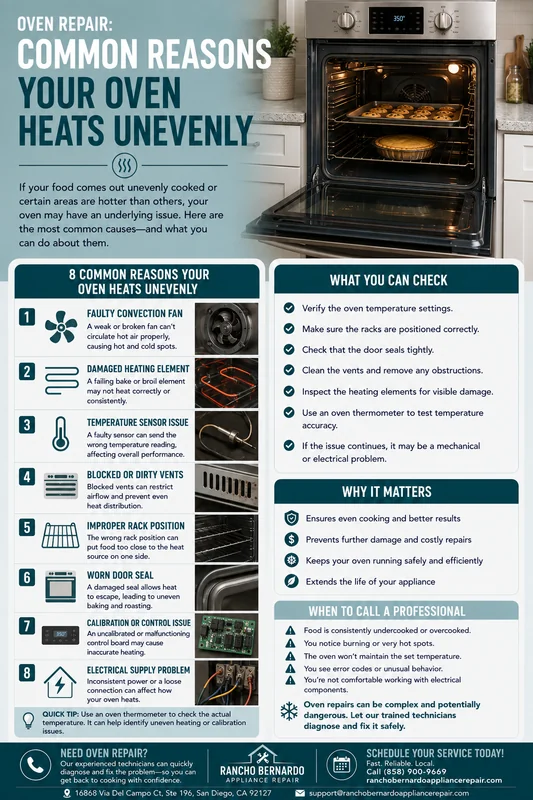
Electric ovens rely on visible heating elements that can develop weak spots as they age. A partially failing element still glows but no longer produces consistent heat across its full length. Visually inspecting the element for dark spots or blistering is a good first diagnostic step.
An Inaccurate Temperature Sensor
The temperature sensor inside the oven cavity tells the control board how hot the interior actually is. When this sensor drifts out of calibration, the oven may run hotter or cooler than the display suggests. This mismatch often causes one area to overcook while another stays undercooked.
A Warped or Damaged Door Seal
The gasket around the oven door keeps heat trapped evenly inside the cavity during baking. A worn or torn seal lets heat escape near the door while the back of the oven stays hotter. This creates the classic front cool, back hot pattern many home bakers notice.
Convection Fan Problems
Convection ovens use a fan to circulate hot air evenly throughout the cavity during baking. A weak or malfunctioning fan motor fails to move air properly, leaving hot and cool pockets. This is a common cause of uneven results in otherwise well calibrated convection models.
Gas Burner or Igniter Issues
In gas ovens, a partially clogged burner or a weak igniter can cause inconsistent flame distribution. This leads to certain areas of the oven cavity receiving less direct heat than others. Cleaning the burner ports is a simple task that sometimes resolves the problem entirely.
Placement of Bakeware and Racks
Dark, heavy bakeware absorbs and holds heat differently than light colored pans, which can skew results. Using the wrong rack position for a given recipe also contributes to uneven cooking. These factors are worth ruling out before assuming a mechanical failure is to blame.
A Miscalibrated Control Board
The control board manages how long and how often the heating elements or burners cycle on and off. A software glitch or aging board can cause irregular cycling that leads to hot and cool spots. This is one of the less obvious reasons an oven heats unevenly despite otherwise healthy parts.
Testing Your Oven at Home
An inexpensive oven thermometer placed on different racks can reveal temperature differences before calling for service. Running the same test at multiple points in a cycle helps identify whether the issue is constant or intermittent. This simple check gives a technician useful information ahead of the visit.
How a Professional Diagnostic Visit Works
A technician typically tests the heating elements, sensor, and control board with specialized equipment during a single visit. This process identifies the exact failing part rather than replacing components based on guesswork. Most oven diagnostic visits are completed within about an hour.
Preventive Maintenance for Consistent Baking
Wiping down the door seal and checking for visible element damage every few months catches problems early. Avoiding harsh oven cleaners on the gasket also helps it stay flexible and effective for longer. These habits protect the parts most responsible for even heat distribution.
Repair Versus Replacement for Older Ovens
An oven under ten years old with a single failing part is almost always worth repairing. Older units with multiple aging components may make more financial sense to replace instead. A technician can offer an honest comparison based on your specific model and its condition.
Common Mistakes That Mimic a Mechanical Problem
Preheating for too short a time or opening the door frequently during baking can cause similar uneven results. Overcrowding the oven with multiple pans also blocks proper heat circulation around each dish. Ruling out these habits first can save you the cost of an unnecessary service call.
How Gas and Electric Ovens Differ in This Regard
Gas ovens rely on burner placement and airflow, while electric ovens depend on element condition and sensor accuracy. Both types can develop uneven heating, though the root causes differ significantly between them. Knowing which type of oven you own helps a technician arrive prepared with the right parts.
When an oven heats unevenly, the cause is usually a specific part. It is rarely a mystery you have to live with. Rancho Bernardo Appliance Repair has been solving oven performance issues across San Diego County since 2001. Our technicians test elements, sensors, and control boards to pinpoint the real source of the problem. Schedule a visit to get consistent, evenly baked results back in your kitchen.
FAQ: Oven Heats Unevenly
How do I know if my oven's heating element is failing?
Look closely at the visible bake or broil element for dark spots, blistering, or areas that no longer glow evenly. A partially failing element still works but produces inconsistent heat across its length. This visual check is often the fastest way to confirm why an oven heats unevenly.
Can a bad door seal really cause uneven baking results?
Yes, a torn or warped gasket lets heat escape near the door while the back of the cavity stays hotter. This creates the common pattern of a cool front and an overly hot back during baking. Replacing the door seal is usually an affordable and effective fix.
Is uneven heating different in a convection oven?
Convection ovens rely on a fan to circulate hot air evenly throughout the entire cavity during cooking. A weak or failing fan motor leaves noticeable hot and cool pockets even with a healthy heating element. This is one of the more common convection specific causes.
Can I test my oven's evenness before calling a technician?
An inexpensive oven thermometer placed on different racks can reveal real temperature differences during a normal bake. Running this test at a few points in the cycle helps show whether the issue is constant or intermittent. This information is genuinely useful for a technician ahead of time.
Is it the bakeware or the oven causing my baking issues?
Dark, heavy bakeware absorbs heat differently than lighter pans and can slightly skew results on its own. Using the wrong rack position for a specific recipe adds another variable to consider. Ruling these out first helps confirm whether the oven itself needs professional attention.