

Reasons Your AC Runs but Does Not Cool
An air conditioner that hums along without actually cooling the house is a frustrating summer problem. This situation usually points to a specific part rather than a total system failure. Rancho Bernardo Appliance Repair diagnoses why an AC runs but does not cool for San Diego County homes regularly. Most causes are identifiable during a focused inspection.
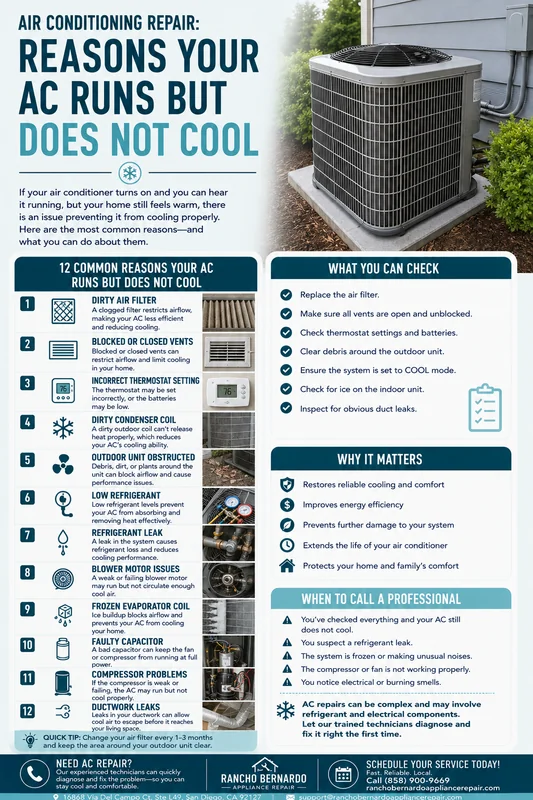
Low Refrigerant From a Leak
Refrigerant levels naturally stay constant unless a leak develops somewhere in the system. Low levels mean the system cannot absorb heat effectively from indoor air. Locating and repairing the leak requires specialized equipment.
A Dirty or Frozen Evaporator Coil
Dust buildup or restricted airflow can cause the evaporator coil to freeze over completely. Ice on the coil actually blocks the cooling process rather than helping it. This is a surprisingly common cause of weak or absent cooling.
A Clogged Air Filter
A blocked filter restricts airflow across the coil, reducing overall cooling capacity significantly. This simple issue is one of the easiest and cheapest to fix yourself. Checking and replacing the filter monthly during summer prevents this problem.
Dirty Outdoor Condenser Coils
The outdoor unit releases heat through its condenser coils during normal operation. Dirt, leaves, or debris buildup blocks this heat release process significantly. Cleaning the outdoor unit twice a year keeps this from happening.
A Failing Compressor
The compressor circulates refrigerant through the entire cooling system continuously. A weakening compressor cannot maintain the pressure needed for effective cooling. This is often the most serious and expensive cause on this list.
Leaky or Poorly Insulated Ductwork
Cool air escaping through duct gaps never reaches the rooms it was meant to cool. This can make the system seem like it is running without producing results. Sealing and insulating ducts improves overall cooling efficiency.
An Undersized System for the Home
A system too small for the square footage it serves struggles to keep up on hot days. This mismatch causes the AC to run constantly without reaching the target temperature. This traces back to original installation sizing decisions.
A Faulty Thermostat
A thermostat reading temperature inaccurately can prevent the system from cycling correctly. This creates a pattern that mimics a cooling failure elsewhere in the system. Testing the thermostat is a quick and inexpensive first step.
A Failing Blower Motor
The blower motor pushes cooled air throughout the ductwork and into each room. A weakening motor moves less air, reducing how effectively cooling reaches the house. This part failure often develops gradually over time.
Why San Diego’s Climate Adds Extra Strain
Warm, dry summer days put extra demand on AC systems throughout the county. Units already running near their limit are more likely to show these symptoms first. Regular maintenance matters even more in this kind of climate.
How Technicians Diagnose This Complaint
A technician checks refrigerant levels, coils, and airflow in a logical sequence. This process identifies the true bottleneck rather than replacing parts by guesswork. Most diagnostic visits are completed within a single appointment.
Comparing This to a Fully Non Functional AC
A unit that will not turn on at all points to an electrical or power issue instead. An AC runs but does not cool situation is different, since the system is clearly operating. This distinction helps narrow down the likely cause significantly.
How Attic and Roof Heat Affect Performance
Ductwork routed through a hot attic can gain heat before air ever reaches your rooms. This is a common issue in San Diego County homes with attic mounted systems. Insulating exposed ducts can meaningfully improve cooling delivery.
What Refrigerant Type Your System Uses
Older systems often use a refrigerant type that is being phased out and costs more. A technician can identify your system’s refrigerant type during the visit. This detail affects repair cost if a leak needs recharging.
Simple Checks Before Calling for Service
Confirm the thermostat is set to cooling mode and the temperature below the room’s current level. Check that the outdoor unit has power and the breaker has not tripped. These two checks take only a couple of minutes.
Why Same Day Service Matters in Summer
A home without working cooling during a San Diego heat wave becomes uncomfortable fast. Same day appointments exist specifically to address this kind of urgent situation. Acting quickly also limits strain on parts that might still be repairable.
When an AC runs but does not cool, the fix is almost always a specific, identifiable part. Rancho Bernardo Appliance Repair has resolved cooling complaints across San Diego County since 2001. Our technicians test the whole system methodically to find the actual cause. Schedule a visit to get real cooling back before the next heat wave.
FAQ: AC Runs but Does Not Cool
What should I check myself before calling a technician?
Start with the air filter, since a clogged one is the most common cause. Also check that all vents throughout the house are open and unblocked. These two checks take only a few minutes and cost nothing.
Can a frozen coil really stop cooling completely?
Yes, ice buildup on the evaporator coil blocks the heat exchange process entirely. This is a common reason an AC runs but does not cool on hot days. Turning off the system to let it thaw is a reasonable first step.
How do I know if my AC has a refrigerant leak?
Gradually worsening cooling performance over several weeks often points to a slow leak. A technician uses specialized tools to locate the exact source. This repair requires proper certification and cannot be done as a simple DIY fix.
Is a failing compressor always a replace the whole unit situation?
Not always, since compressor age and overall system condition both factor into the decision. A technician can compare repair cost against a full system replacement honestly. Newer units are usually worth repairing rather than replacing.
Does cleaning the outdoor unit really make a noticeable difference?
Yes, dirty condenser coils significantly reduce how efficiently the system releases heat outside. Cleaning them twice a year is a simple habit that improves performance. This is one of the easiest preventive steps homeowners can do themselves.