

Common Reasons Your Refrigerator Is Not Cooling
Few appliance problems create panic faster than opening the fridge to find it warm inside. Spoiled groceries and a scramble to save what you can make this one of the more urgent repair calls. Rancho Bernardo Appliance Repair hears about a refrigerator not cooling from homeowners across San Diego County nearly every week. The good news is that most causes are identifiable and often repairable the same day.
Dirty or Blocked Condenser Coils
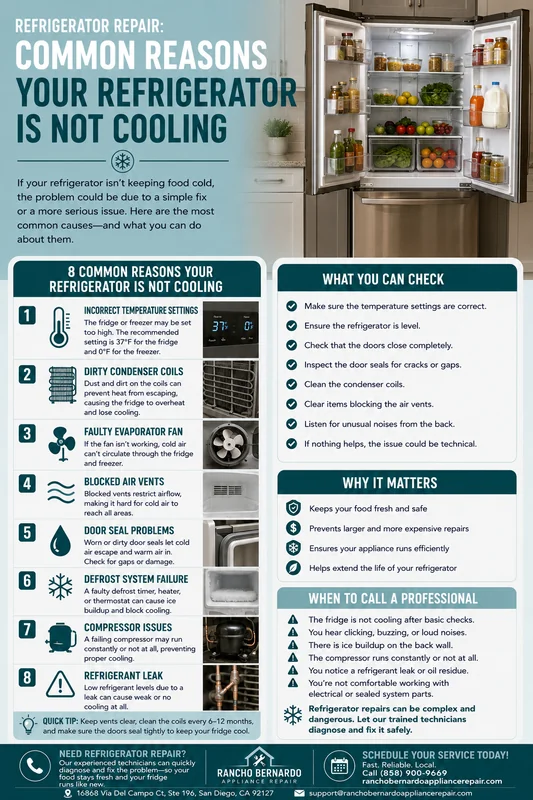
Condenser coils release heat from the refrigerant as it cycles through the system. Dust and pet hair buildup on these coils, usually located behind or underneath the unit, trap heat inside. Vacuuming the coils twice a year is one of the simplest ways to prevent cooling problems.
A Faulty Evaporator Fan Motor
The evaporator fan pushes cold air from the freezer section into the refrigerator compartment. When this fan motor fails, the freezer may stay cold while the fridge section warms up noticeably. A humming or clicking sound near the back wall of the freezer often signals this issue.
Thermostat or Temperature Control Failure
The thermostat tells the compressor when to run based on the temperature inside the unit. A failing thermostat can stop sending that signal, leaving the compressor idle even as the interior warms. Testing this part is a quick step during any professional diagnostic visit.
Low Refrigerant from a Slow Leak
Refrigerant does not get used up over time. Low levels almost always mean a leak somewhere in the sealed system. A slow leak causes gradually worsening cooling rather than a sudden failure. Locating and repairing the leak requires specialized tools that most technicians carry on every visit.
.
A Door Seal That No Longer Closes Tight
Cracked or warped door gaskets let warm kitchen air seep into the fridge continuously throughout the day. This forces the compressor to run far more often just to maintain temperature. The dollar bill test, closing a bill in the door and checking for resistance, quickly reveals a weak seal.
An Overworked or Failing Compressor
The compressor pumps refrigerant through the entire cooling system and is the most expensive part to replace. Age, electrical issues, or years of strain can all cause it to underperform or stop working. This is often the most serious cause behind a refrigerator that will not cool.
Vents Blocked by Food Storage
Cold air vents inside the fridge and freezer can become blocked by containers pushed too close to the wall. This restricts airflow between compartments and creates uneven cooling throughout the unit. Rearranging stored food to keep vents clear is a free fix worth trying first.
Why a Fast Diagnosis Matters
Every hour a refrigerator not cooling properly increases the risk of food spoilage and potential illness from unsafe items. Same day diagnostic visits help homeowners decide quickly whether to repair the unit or start shopping for a replacement. Acting fast also limits strain on parts that might still be salvageable.
How Technicians Approach the Diagnosis
A technician typically checks coils, fan motors, and the thermostat before testing refrigerant pressure in the sealed system. This ordered process rules out the simplest and cheapest causes before considering more expensive repairs. Most visits identify the actual cause within the first thirty minutes.
Preventive Habits That Reduce Cooling Failures
Vacuuming condenser coils twice a year and checking door seals regularly prevents many common cooling problems. Keeping the refrigerator a few inches from the wall also allows proper airflow around the coils. These small habits meaningfully reduce how often cooling failures happen.
When Replacement Makes More Financial Sense
A refrigerator older than twelve years with a failing compressor is often better replaced than repaired. Newer, energy efficient models can also lower monthly utility bills significantly compared to an aging unit. A technician can help weigh these numbers honestly before you decide.
Protecting Food Safety While You Wait
Keep the refrigerator door closed as much as possible to slow the rate of internal warming. Moving perishable items into a cooler with ice packs buys valuable extra time before food safety becomes a real concern. This step matters most during the hours before a technician arrives.
Signs Your Refrigerator Needs Immediate Attention
A refrigerator that feels warm to the touch on the outside, paired with a warm interior, needs same day attention. Waiting even one extra day risks losing an entire refrigerator full of groceries. Same day appointments exist for exactly this kind of urgent situation.
A refrigerator not cooling properly deserves fast attention before spoiled food becomes the least of your worries. Rancho Bernardo Appliance Repair has served San Diego County families since 2001 with reliable, same day diagnostics. Our technicians carry parts for every major brand, which often means a same visit repair. Call as soon as you notice warming to protect both your groceries and your budget.
FAQ: Refrigerator Not Cooling
What should I check first if my fridge stops cooling?
Start by checking the condenser coils, usually behind or underneath the unit. Make sure they are not covered in dust or pet hair. Blocked coils are one of the most common and easiest to fix causes of a refrigerator not cooling properly. Vacuuming them takes only a few minutes and sometimes solves the problem instantly.
How can I tell if the door seal is causing the issue?
Close a dollar bill in the door and try pulling it out while the door stays shut. If it slides out easily, the gasket is likely too worn to keep cold air inside the unit. A weak seal forces the compressor to run constantly just to maintain temperature.
Does a refrigerator that is not cooling always mean low refrigerant?
Not always, since fan motors, thermostats, and blocked vents can all cause similar warming symptoms. Low refrigerant is usually accompanied by gradually worsening performance rather than a sudden change. A technician can test multiple components quickly to identify the actual cause.
How fast should I act when the fridge stops cooling?
Acting within the first few hours gives you the best chance of saving refrigerated food from spoiling. It also limits additional strain on parts that might still be repairable rather than fully failed. Same day diagnostic visits exist specifically to address this kind of urgent situation.
Can overloading the fridge cause cooling problems?
Yes, packing food too tightly against the internal vents restricts airflow between the freezer and fridge sections. This creates uneven cooling even when every mechanical part is working correctly. Rearranging stored items to keep vents clear is a free first step worth trying.